
Arizona still has the sunshine, desert views, Grand Canyon trips, golf courses, spring training, and fast-growing metro areas that attract people from across the country. But for many families, retirees, renters, and first-time homebuyers, the cost of living in Arizona no longer feels like the bargain it once was.
A March 2026 Stacker report based on a Current survey found that 41% of Arizona respondents believed the state was affordable. That placed Arizona at No. 25 among the least affordable states in the survey, putting it near the middle of the national affordability picture rather than among the cheapest states. Neighboring states showed wide differences, including California at 27%, Nevada at 24%, New Mexico at 40%, Utah at 28%, and Colorado at just 14%.
Other data also shows Arizona has moved into a more expensive category. RentCafe’s 2026 cost-of-living calculator shows that Arizona is 5% above the national average, with housing 14% higher, utilities 5% higher, and groceries about 3% higher.
What is the cost of living in Arizona?

The cost of living in Arizona is the amount a person or household needs to cover basic expenses such as housing, utilities, food, transportation, health care, taxes, insurance, child care, and everyday services.
Arizona is not as expensive as California, Hawaii, New York, or many coastal metros. But it is also no longer a low-cost desert escape for everyone. World Population Review’s 2026 cost-of-living index lists Arizona at 110.7, using 100 as the national average. That means Arizona is above the U.S. baseline by that measure.
The gap between perception and reality matters. People moving from Los Angeles, San Diego, Seattle, Denver, or the Bay Area may still see Arizona as cheaper. But people moving from the Midwest, parts of Texas, New Mexico, Alabama, Oklahoma, or Mississippi may find Arizona more expensive than expected.
Housing is the biggest reason Arizona feels pricier
Housing is the main reason Arizona’s affordability has shifted. Phoenix, Tucson, Flagstaff, Scottsdale, Mesa, Gilbert, Chandler, Tempe, Surprise, and Queen Creek have all felt the impact of population growth, limited supply, investor demand, and higher mortgage rates.
The supplied cost data lists Arizona housing costs from about $1,206 to $2,676 per month, depending on rental size. It also lists median gross rent at $1,608 and a median monthly mortgage cost of $1,739. Those numbers can be manageable for higher-income households, but they are tough for workers whose pay has not kept pace with home prices.
Arizona’s housing market has cooled from peak frenzy, but it remains expensive compared with its pre-pandemic baseline. The Common Sense Institute reported that the average Arizona house was $420,906 in early 2026, down from prior highs but still $142,879 above the end-of-2019 level.
Arizona is still growing, but affordability is tighter

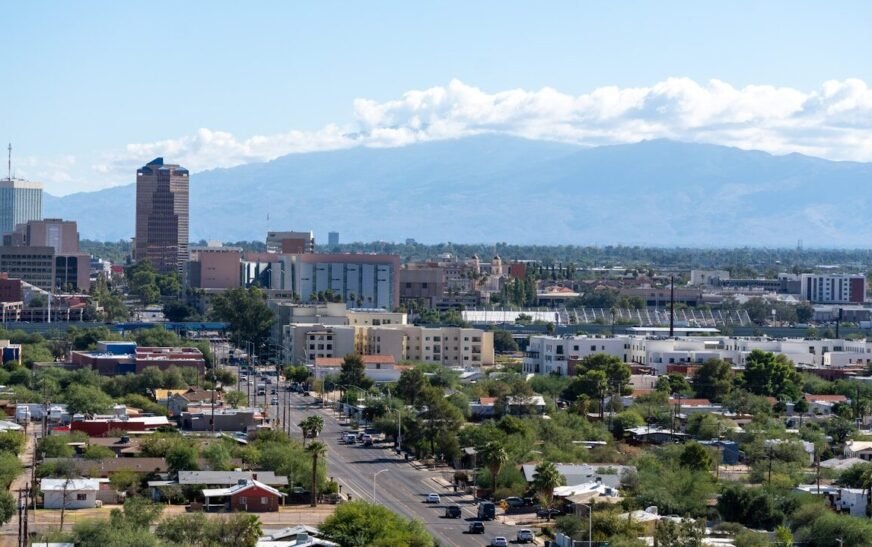
Phoenix remains the center of Arizona’s housing and job market. It offers major employers, sports, airports, restaurants, health care, universities, and suburban growth. RentCafe says Phoenix’s cost of living is the same as the Arizona average and 5% higher than the national average, with housing costs 12% above the U.S. average.
That does not mean Phoenix is equally expensive everywhere. Central Phoenix, Arcadia, Scottsdale, Paradise Valley, Tempe, and some East Valley areas can be much more expensive than parts of Glendale, Peoria, Mesa, Avondale, Goodyear, Buckeye, or Casa Grande.
The next wave of growth is also spreading beyond Maricopa County. Axios reported in May 2026 that Pinal County captured nearly 70% of Arizona’s domestic net migration gain in the prior year, with growth especially visible in southeastern Phoenix suburbs such as San Tan Valley.
Utilities and summer bills can surprise newcomers
Arizona’s desert climate creates a cost that many newcomers underestimate: summer cooling. Even if winter heating costs are mild, air conditioning can push electricity bills higher during extended periods of extreme heat.
The supplied data estimates average Arizona utility costs at about $390 per month, including electricity, natural gas, cable and internet, and water. RentCafe’s statewide data also shows that Arizona utilities are running 5% above the national average.
Water is another long-term concern. Arizona’s growth has increased attention on groundwater, Colorado River allocations, and development patterns. This does not mean every household will see sudden cost spikes, but water planning is part of the state’s affordability future, especially in fast-growing desert communities.
Groceries, transportation, and health care add to the budget

Food costs in Arizona are not extreme compared with the most expensive U.S. states, but they are not especially cheap either. The supplied data puts average grocery and non-restaurant food costs at $327 per person per month, or $3,923 per year.
Transportation is another important line item. Arizona is heavily car-dependent outside select urban corridors. MIT-based figures in the supplied content estimate annual transportation costs at $9,783 for one adult with no children, $11,322 for two working adults with no children, and $18,205 for two working adults with three children.
Health care also matters. The supplied material lists average annual per-person health care costs at $7,943. Actual costs can vary widely based on insurance coverage, employer benefits, age, prescriptions, and whether a household lives near major medical networks in Phoenix, Tucson, or Flagstaff.
Arizona taxes help, but they do not erase high costs
Arizona has one big affordability advantage: a low flat income tax. The Arizona Department of Revenue says the state has a 2.5% tax rate for all income levels and filing statuses for 2025.
The Tax Foundation’s Arizona profile also lists a 2.5% flat individual income tax rate, a 5.6% state sales tax rate, an 8.52% average combined state and local sales tax rate, and a 0.48% effective property tax rate on owner-occupied housing value.
That mix is important. Arizona’s low-income tax can help workers and retirees, and its property tax rate is relatively low. But sales taxes can add up, especially for families that spend a large share of their income on taxable goods and services.
How much money do you need to live comfortably in Arizona?
There is no single comfortable salary for Arizona because costs vary by city, household size, debt, rent, and lifestyle. A single adult in Tucson or Bullhead City may need less than a family buying in Scottsdale, Flagstaff, Chandler, or Gilbert.
The supplied data says Arizona’s average total personal consumption cost is $53,921 per year, based on Bureau of Economic Analysis figures. That breaks down into housing and utilities, health care, groceries, gasoline, energy goods, and other personal expenditures.
For a practical estimate, many single adults may need at least the mid-$50,000s to live with some breathing room in an average Arizona market. Families often need far more, especially if they have child care, two vehicles, student loans, medical costs, or a mortgage. In higher-cost areas, a six-figure household income can still feel tight.
The cheapest places to live in Arizona are not always the biggest cities
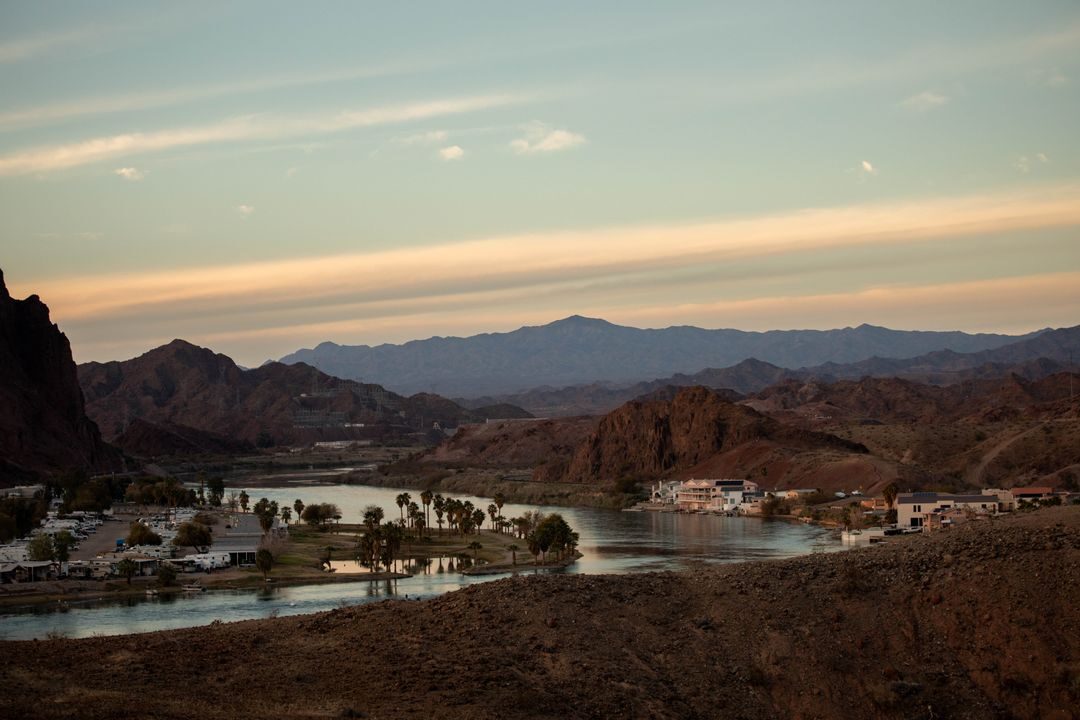
Bullhead City is often listed among Arizona’s lower-cost options. It sits along the Colorado River near Nevada and offers river recreation, lower housing costs, and a slower pace. It can appeal to retirees, remote workers, and people who want lower costs without leaving the Southwest.
Surprise is another option for people who want to stay near metro Phoenix but avoid the highest prices in Scottsdale, Tempe, or central Phoenix. It offers suburban housing, spring training, parks, and access to the larger job market.
Phoenix itself can still be more affordable than some major U.S. metros, but it is no longer as cheap as it once was. Tucson, Yuma, Sierra Vista, Casa Grande, and some smaller cities may offer lower costs depending on job needs and lifestyle.
Arizona can still be worth it if the budget works
Arizona remains attractive for many reasons. The state had an estimated population of 7,623,818 in 2025, according to the U.S. Census Bureau, showing continued growth. People still move for sunshine, jobs, retirement, lower taxes, outdoor recreation, and housing that may be cheaper than in California or Colorado.
But Arizona’s affordability now requires more careful math. Newcomers should compare rent, mortgage rates, summer utility bills, car costs, insurance, child care, taxes, and health care before moving.
The best answer is not simply whether Arizona is affordable. The better question is whether a specific Arizona city fits your income. For some households, the answer is still yes. For others, the Grand Canyon State may now cost more than expected.
TLDR
- Arizona is no longer a clearly low-cost state, with RentCafe placing its 2026 cost of living 5% above the national average.
- A 2026 survey found that 41% of Arizona respondents considered the state affordable, ranking it No. 25 among the least affordable states.
- Housing is the biggest pressure point, especially in Phoenix, Scottsdale, Flagstaff, Chandler, Gilbert, and other fast-growing areas.
- The average Arizona house was $420,906 in early 2026, still far above its 2019 level despite cooling from peak prices.
- Arizona has a low 2.5% flat income tax, but combined state and local sales taxes average 8.52%.
- Utilities can surprise newcomers because long, hot summers make air conditioning a major household expense.
- Bullhead City, Surprise, Tucson, Yuma, Sierra Vista, and some outer Phoenix-area communities may offer better affordability than the state’s priciest markets.
- Arizona can still be worth it for sunshine, jobs, retirement, and outdoor living, but newcomers should compare city-level costs before moving.