

A bipartisan proposal in Congress could make existing restrictions on Chinese-connected vehicles permanent and expand the government’s ability to block cars, software, and important components linked to foreign adversaries.
Supporters said the Connected Vehicle Security Act would protect American jobs, personal data, and national security. They warned that heavily subsidized Chinese automakers could enter the United States with low-priced vehicles that domestic companies might struggle to match.
The proposal could strengthen the U.S. auto industry’s protection against Chinese competition, but broader restrictions could also require manufacturers to replace some suppliers and raise costs across the vehicle market.
The bill targets Chinese-linked vehicles
Sens. Bernie Moreno (Ohio) and Elissa Slotkin (Michigan) introduced the Connected Vehicle Security Act in April 2026.
The bill would prohibit the importation, manufacture, sale, and resale of connected vehicles linked to China and other countries designated as foreign adversaries. It would also cover certain vehicle software and hardware made by, controlled by, or produced in partnership with restricted entities.
Companion legislation was later introduced in the House by Republican John Moolenaar and Democrat Debbie Dingell of Michigan.
Existing rules already limit Chinese technology
The proposal would build on a Commerce Department rule finalized in January 2025.
That rule restricts transactions involving connected-vehicle software and hardware linked to China or Russia. The software restrictions generally begin with model year 2027 vehicles, while major hardware restrictions begin with model year 2030 vehicles.
The congressional proposal would place similar protections into federal law. Supporters argued that legislation would make the policy harder for a future administration to reverse through executive action.
Connected cars raise data concerns

Modern vehicles can collect large amounts of information through cameras, microphones, navigation systems, mobile applications, and internet-connected controls.
That information may include a driver’s location, travel patterns, contacts, nearby surroundings, and details about the vehicle’s operation. Lawmakers said technology controlled by a foreign adversary could create opportunities for surveillance, data collection, or remote interference.
The Commerce Department said its restrictions were intended to prevent foreign governments from exploiting connected-vehicle systems and sensitive information collected from U.S. drivers.
Supporters want to protect U.S. jobs
The Alliance for American Manufacturing warned that Chinese automakers benefit from government support, extensive supply chains, and production capacity that exceeds domestic demand.
Those advantages can enable companies to sell vehicles abroad at prices competitors find difficult to match. The organization argued that unrestricted imports could threaten U.S. assembly plants, parts suppliers, and communities that depend on automotive employment.
The Alliance for Automotive Innovation, which represents major automakers, also said China’s effort to dominate automotive and battery production presented economic and national security concerns.
Chinese cars remain rare in the U.S.
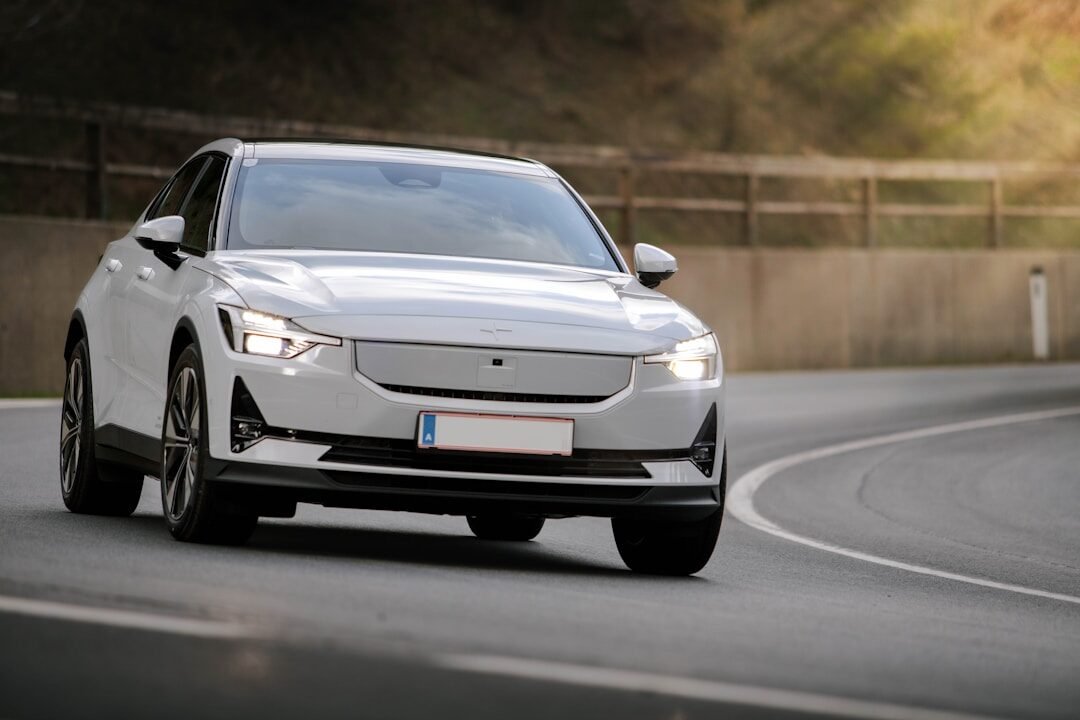
Chinese automotive brands have gained market share in Europe, Latin America, Asia, and other regions, but their passenger vehicles remain largely absent from the United States.
High tariffs and the connected-vehicle rule have created substantial barriers to direct imports. Chinese-built electric vehicles were already subject to a 100% additional tariff introduced in 2024, although trade policies and effective tariff levels continued to change afterward.
Lawmakers were also concerned that Chinese companies could avoid restrictions by assembling vehicles in Mexico, Canada, or the United States. The proposed legislation was written to cover some vehicles produced through Chinese-controlled companies and partnerships, not only cars shipped directly from China.
Auto parts could create complications
Chinese-branded cars may be uncommon in the United States, but Chinese companies already have a presence in the American automotive supply chain.
Chinese-owned suppliers produce or supply components such as glass, airbags, steering systems, batteries, and electronic equipment. More than 60 Chinese-owned suppliers reportedly operated in the United States, representing investments in hundreds of automotive businesses and facilities.
The effect of the legislation would depend on how regulators defined covered hardware and partnerships. Broad restrictions could require automakers to trace ownership throughout their supply chains and replace components previously considered acceptable.
Consumers could see mixed effects

Keeping low-priced Chinese vehicles out of the market could protect U.S. manufacturers from sudden competition and help preserve domestic production jobs.
However, consumers would also lose access to some inexpensive electric vehicles sold in other countries. Chinese companies such as BYD have expanded by offering models at prices lower than those of many American and European competitors.
Replacing restricted components could also raise costs for automakers, especially when alternative suppliers are limited. Companies could pass some of those expenses to buyers through higher vehicle prices, although the final effect would depend on exemptions, implementation dates, and supply-chain adjustments.
The proposal still faces several steps
Introducing a bill does not make it law. The Connected Vehicle Security Act would need to pass the Senate and House before being signed by the president.
The measure had bipartisan sponsors from major automotive states, and industry groups supported its goal of preventing Chinese-controlled vehicles from gaining a large presence in the U.S. Still, lawmakers could debate how broadly the restrictions should apply to parts, joint ventures, batteries, and software.
The central question is how the United States can protect national security and domestic manufacturing without unnecessarily disrupting existing supply chains or increasing costs for drivers.
TL;DR
- A bipartisan bill would restrict Chinese-linked connected vehicles, software, and hardware in the United States.
- Sens. Bernie Moreno and Elissa Slotkin introduced the Senate proposal in April 2026.
- The legislation would build on Commerce Department restrictions finalized in January 2025.
- Supporters say connected vehicles could collect sensitive data or create national security risks.
- Manufacturing groups warn that subsidized Chinese vehicles could threaten U.S. auto and parts jobs.
- Chinese companies already supply components for vehicles sold in the United States.
- Broader restrictions could protect domestic manufacturers but may reduce low-cost choices and increase some supply-chain expenses.