
Ford Motor Company expected to recover $1.3 billion in tariffs after the U.S. Supreme Court ruled that the International Emergency Economic Powers Act did not authorize the president to impose the disputed import duties.
The automaker recognized the expected refund as a one-time benefit in its first-quarter 2026 financial results. That adjustment helped lift Ford’s adjusted earnings before interest and taxes, or EBIT, to $3.5 billion.
However, the tariff relief did not remove all of Ford’s cost pressures. Higher oil, transportation, and commodity expenses were expected to offset much of the benefit during the remainder of 2026.
Ford recorded a $1.3 billion tariff benefit
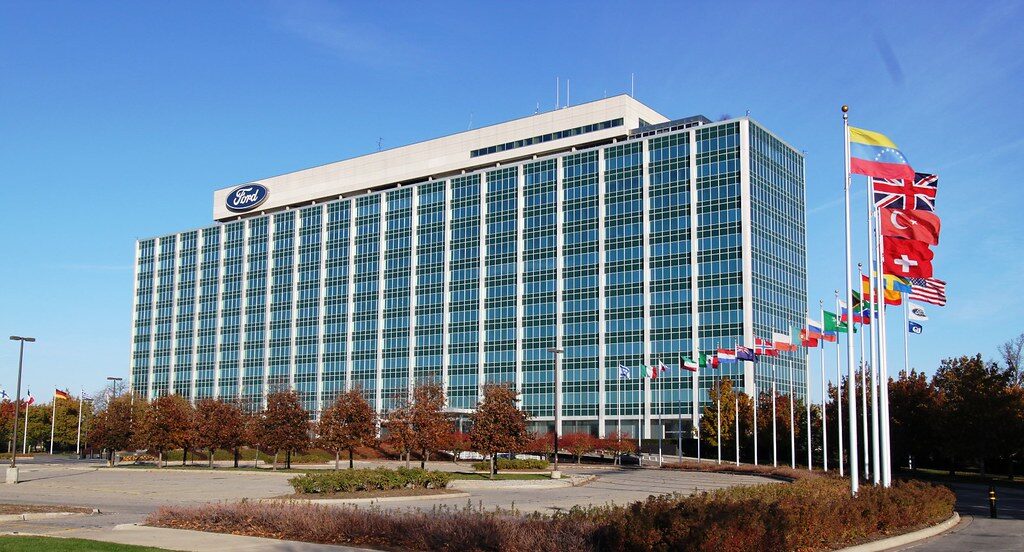
Ford said its first-quarter results included a $1.3 billion one-time benefit connected to tariffs imposed under the International Emergency Economic Powers Act, commonly known as IEEPA.
The amount reflected tariffs paid by Ford and its suppliers between March 2025 and February 2026. The benefit primarily supported the Ford Blue and Ford Pro business units, which produce consumer and commercial vehicles.
Ford recorded the expected reimbursement in its earnings because the company believed the previously paid tariffs were recoverable. The automaker had not yet received the money when it reported its quarterly results.
The Supreme Court rejected the tariff authority
The U.S. Supreme Court ruled on February 20, 2026, that IEEPA did not give the president authority to impose tariffs.
The decision affected reciprocal and drug-trafficking tariffs introduced under the emergency-powers law. It did not eliminate every U.S. tariff because duties imposed under other trade laws remained in effect.
The ruling opened the way for businesses to seek refunds on eligible IEEPA tariffs already paid. However, companies still had to complete the claims process before receiving the cash.
The refund had not entered Ford’s cash flow

The $1.3 billion benefit increased Ford’s reported adjusted EBIT, but it did not improve the company’s first-quarter free cash flow.
Ford expected the refund to be collected later in 2026. Until that happened, the amount remained an accounting benefit rather than cash that the company could use immediately.
Ford reported $1.3 billion in operating cash flow during the quarter. Adjusted free cash flow was negative $1.9 billion, while the company ended March with $22 billion in cash and $43.1 billion in available liquidity.
Ford’s first-quarter revenue increased
Ford generated $43.3 billion in first-quarter revenue, representing a 6% increase from the same period in 2025.
Net income reached $2.5 billion, while adjusted EBIT rose to $3.5 billion. The tariff adjustment accounted for a significant share of that earnings performance.
The results showed that Ford’s traditional vehicle and commercial operations remained profitable, even as its electric vehicle division continued to report losses.
Ford Blue returned to stronger profitability
Ford Blue, which includes the company’s gasoline-powered and hybrid consumer vehicles, reported approximately $1.9 billion in EBIT during the first quarter.
That was a sharp improvement from about $100 million during the same quarter in 2025. The division benefited from the tariff adjustment, stronger revenue, and Ford’s focus on profitable trucks and sport utility vehicles.
Ford Pro, which serves commercial customers, generated $1.7 billion in EBIT. That was up from approximately $1.3 billion a year earlier.
Ford Model e, the company’s electric vehicle business, recorded a loss of about $800 million. The result was roughly unchanged from the first quarter of 2025.
Higher commodity costs could erase the gain
Ford expected much of the tariff benefit to be offset by higher commodity costs during 2026.
The company raised its projected commodity inflation expense to slightly more than $2 billion. At the beginning of the year, Ford had expected an increase of approximately $1 billion.
Higher oil prices were expected to raise the cost of transporting vehicles, parts, and materials. Disruptions affecting the Strait of Hormuz and Iranian ports also placed pressure on global energy and commodity markets.
The additional $1 billion in unexpected commodity inflation was close to the value of Ford’s anticipated tariff refund.
Ford said its aluminum supply was protected
Global aluminum supplies also faced pressure, but Ford said its primary aluminum sourcing arrangements reduced its exposure to those shortages.
The automaker sourced aluminum used in F-Series body panels from Novelis, an Atlanta-based aluminum producer. Ford, therefore, did not expect the broader international aluminum constraints to have the same effect on its operations as higher oil and transportation costs.
However, Ford had already experienced aluminum supply problems in 2025 after fires disrupted production at a Novelis plant in Scriba, New York.
The incident disrupted the supply of aluminum sheet used in the Ford F-150 and highlighted how concentrated supply chains can affect vehicle production.
Ford continued adjusting its EV strategy
Ford also continued moving toward smaller and more affordable electric vehicles.
The company’s Universal Electric Vehicle platform was expected to debut with a midsize electric pickup in the 2027 model year. Ford targeted a price range of approximately $30,000 to $35,000 for future vehicles built on the platform.
CEO Jim Farley said the market appeared receptive to electric vehicles in that price range. However, he declined to disclose how many models Ford planned to build from the platform.
By 2030, Ford expected about 90% of its global nameplates to offer an electrified version. Those options could include traditional hybrids, extended-range electric vehicles, and fully electric models.
TL;DR
- Ford recognized a $1.3 billion benefit from expected refunds of IEEPA tariffs.
- Ford and its suppliers paid the tariffs between March 2025 and February 2026.
- The Supreme Court ruled on February 20, 2026, that IEEPA did not authorize the disputed tariffs.
- Ford reported $43.3 billion in first-quarter revenue and $3.5 billion in adjusted EBIT.
- The refund had not yet been received and was not included in the first-quarter free cash flow.
- Ford expected more than $2 billion in commodity inflation during 2026.
- Ford Blue and Ford Pro remained profitable, while Model e lost approximately $800 million.