
Kroger is continuing to shrink parts of its existing store network even as the grocery giant prepares for a major acquisition that could expand its presence in several states.
At least 39 Kroger-owned stores across multiple banners have closed as part of a previously announced plan to shutter approximately 60 underperforming locations. Kroger first disclosed the strategy in June 2025 and said the closures would take place over about 18 months.
The changes do not signal a broad retreat from grocery retail. Kroger still operates thousands of supermarkets and is simultaneously investing in new stores, pricing initiatives, and its planned $1.65 billion acquisition of Giant Eagle.
At least 39 stores have closed
Current reporting identifies at least 39 Kroger-owned locations that have closed across 15 states as part of the restructuring.
The affected stores stretch across several regional banners, including Kroger, Fred Meyer, Fry’s Food and Drug, Harris Teeter, Jay C, King Soopers, Mariano’s, Pick ’n Save, and QFC.
Kroger has not published a complete public list identifying all approximately 60 stores included in the original plan, so additional closures could still be announced before the restructuring is completed.
Kroger still has an enormous reach
The company operated 2,697 supermarkets across 35 states and the District of Columbia as of January 31, 2026.
Of those stores, 2,250 included pharmacies, and 1,731 had fuel centers. Kroger operates under numerous regional names, which means shoppers may not always realize that stores with different signs belong to the same parent company.
That scale also puts the closures in perspective. Even after dozens of shutdowns, Kroger remains one of the largest supermarket operators in the United States.
Weak stores are the main target
Kroger first announced the approximately 60-store plan when reporting its first-quarter 2025 financial results.
The company recorded a $100 million impairment charge related to the closures and said the affected locations were expected to generate a modest financial benefit once removed from the network. Kroger also promised to offer workers at closing stores positions at other locations where possible.
The strategy reflects a common retail approach of removing locations that no longer generate sufficient returns while directing money toward stronger stores and markets.
Local shoppers can feel a bigger impact
A few dozen closures may represent a small share of Kroger’s national footprint, but the effect can be much larger in individual communities.
A supermarket may provide groceries, prescriptions, prepared foods, fuel rewards, and jobs in one location. When that store disappears, residents may have to travel farther or switch retailers.
The impact can be especially noticeable in communities with limited grocery competition or poor transportation access. Local concerns have already emerged about some closures due to employment losses and reduced food shopping options.
Kroger is still investing elsewhere
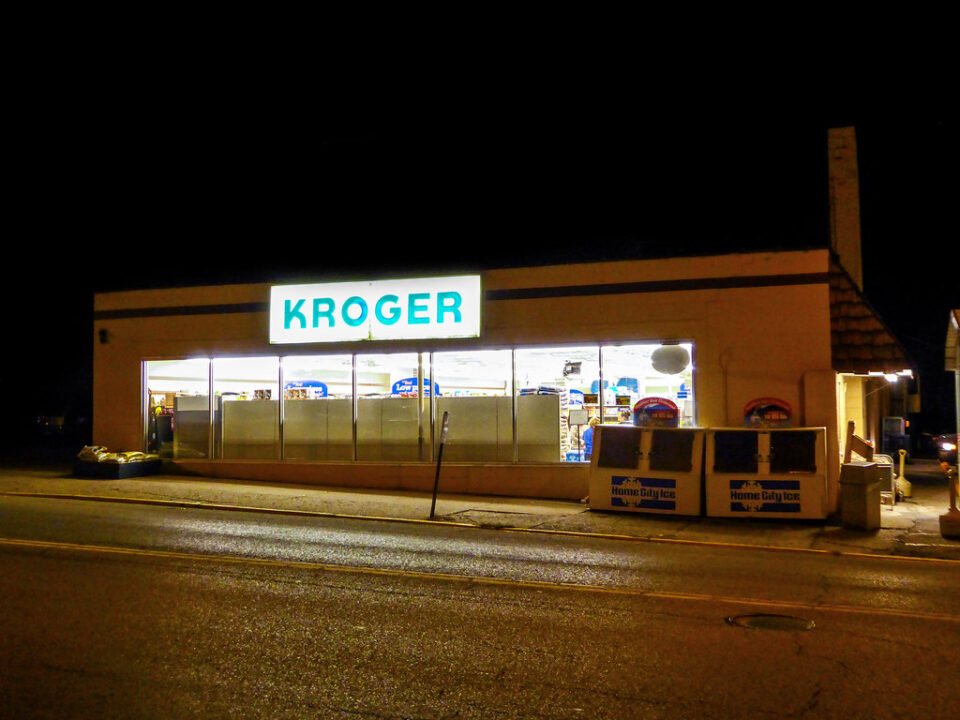
The closures are taking place alongside expansion rather than replacing it.
Kroger has said it intends to reinvest savings from weaker stores into the customer experience. The company has also continued to open stores and pursue operational changes designed to compete more aggressively on price and convenience.
That means one market could lose a neighborhood location while another receives a new or expanded store.
Some sales from closed stores may also shift to nearby Kroger-owned locations, improving the performance of the remaining stores.
Giant Eagle could expand the network
Kroger announced on July 1, 2026, that it had agreed to acquire Giant Eagle for $1.65 billion.
Giant Eagle operates 197 supermarkets and 11 standalone pharmacies across western Pennsylvania, northern Ohio, West Virginia, Maryland, and Indiana. The company generates approximately $9 billion in annual sales.
The transaction is expected to close in 2027, subject to regulatory approval and other customary conditions.
If completed, the acquisition would strengthen Kroger in parts of the Midwest and Mid-Atlantic even while it closes underperforming stores elsewhere.
The strategy is more reshuffling than retreat
Kroger’s nationwide changes show how a large retailer can shrink and grow at the same time.
The company is removing dozens of stores it considers financially weak while maintaining nearly 2,700 supermarkets and pursuing an acquisition that would add almost 200 more.
For shoppers, however, national scale matters less than what happens locally. A single closure can change where a family buys groceries, fills prescriptions, or stops for fuel each week.
The final effect will depend on which additional stores close, how successfully employees transfer to other locations, and whether Kroger continues investing in the communities where its weaker stores disappear.
TL;DR
- Kroger plans to close approximately 60 underperforming stores.
- At least 39 locations across 15 states have already closed under current reporting.
- The closures affect 9 Kroger-owned grocery banners.
- Kroger operated 2,697 supermarkets as of January 31, 2026.
- The company recorded a $100 million impairment charge tied to its closure plan.
- Kroger has agreed to acquire Giant Eagle for $1.65 billion.
- The Giant Eagle deal would add 197 supermarkets if it receives approval and closes as planned.