
New York’s growing efforts to raise revenue from wealthy residents have started a new debate over whether private aviation could eventually become another target.
The discussion followed the adoption of a tax on certain luxury second homes in New York City. An aviation executive argued that similar policies could eventually extend to private jets, airport landings, or aircraft based in the state.
However, no private-jet tax had been formally proposed by Mayor Zohran Mamdani, Gov. Kathy Hochul, the New York Legislature, or the Port Authority of New York and New Jersey. For aircraft owners and operators, the idea remained a possible policy scenario rather than an announced change.
No private-jet tax has been proposed

As of July 2026, New York City was not officially considering a tax specifically targeting private jets.
The idea came from a Fortune commentary written by Greg Raiff, the founder and CEO of private aviation company Elevate Aviation Group. Raiff argued that New York’s recent tax policies made a future levy on private aircraft politically possible.
His article outlined several ways such a policy might work in theory, including airport landing surcharges, state aircraft fees, or taxes based on flight activity. Those were predictions, not proposals introduced by public officials.
Revenue pressure is driving the discussion
Mayor Mamdani entered office with plans to expand public services and address the city’s budget gap through higher contributions from wealthy residents and large corporations.
He proposed raising the city income tax on millionaires by 2 percentage points and increasing corporate taxes. Those proposals required approval from Albany, where Hochul remained opposed to broad income and business tax increases.
State leaders instead approved a narrower tax on certain high-value second homes in New York City. The measure was expected to raise hundreds of millions of dollars annually for the city.
The second-home tax changed expectations

The new pied-à-terre tax applied to qualifying luxury homes that were not used as their owners’ primary residences.
The policy grew from a joint proposal announced by Mamdani and Hochul in April 2026. It later became part of the state budget and took effect on July 1.
Supporters said the tax required wealthy property owners who benefited from New York City to contribute more toward public services. Critics warned that it could discourage investment in luxury real estate.
Its approval sparked speculation that other expensive assets associated with wealthy individuals, such as private aircraft, could be subject to closer scrutiny.
NYC does not control every major airport
New York City could not independently impose a fee at every airport serving the metropolitan region.
The Port Authority operates John F. Kennedy International Airport, LaGuardia Airport, Newark Liberty International Airport, and Teterboro Airport. The agency is jointly controlled by New York and New Jersey rather than City Hall alone.
Teterboro, located in New Jersey, is a general aviation airport about 12 miles from Midtown Manhattan. It does not offer scheduled airline service and is widely used by private and corporate aircraft.
Westchester County operates Westchester County Airport, while the State of New York owns Republic Airport on Long Island. Different governments would therefore have authority over different facilities.
A landing surcharge is one possibility
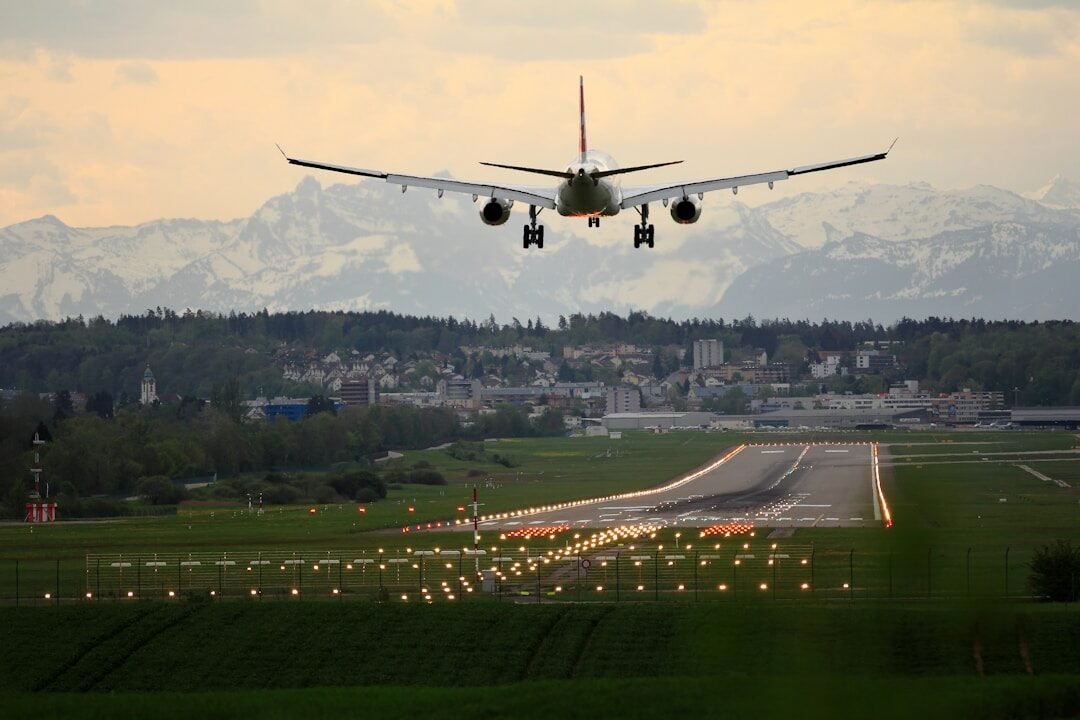
The most direct option discussed by aviation analysts would be an additional charge on private aircraft landing at Port Authority airports.
The Port Authority already collects airport rentals, aviation fees, tolls, and other facility charges. Its financial reports show that increases in aviation activity and fees can contribute to agency revenue.
A new aircraft surcharge would likely require approval through the Port Authority’s governing process and cooperation between officials in New York and New Jersey.
Such a charge could be based on aircraft weight, emissions, noise, flight type, or another measure. No specific rate or structure had been announced.
A state tax would require Albany
New York State could also consider changes affecting aircraft purchases, ownership, registration, or use.
Aircraft and aviation services are already subject to detailed state tax rules and exemptions. Any new statewide excise or registration charge would normally require legislative action and the governor’s approval.
New York City could lobby for such a policy, but the mayor could not create a statewide aircraft tax on his own. Political support in Albany would therefore be essential.
This distinction makes predictions of an imminent city-imposed jet tax misleading.
Operators could change airports or bases
A large surcharge could influence where private aircraft land, remain based, or receive maintenance.
Operators might shift some flights from Port Authority facilities to airports outside the agency’s control. However, an alternative airport may be farther from Manhattan or have fewer hangars, runways, ground services, and available flight slots.
Aircraft owners could also base jets in another state, but that would not necessarily prevent landing or usage fees when flying into the New York area.
Charter customers could still face higher prices if operators passed airport fees through to passengers.
A tax could bring trade-offs
Supporters of a private aviation charge could argue that luxury travel should help finance transportation, climate programs, or public infrastructure.
Private jets generally carry fewer passengers than commercial aircraft, making their per-passenger emissions considerably higher. Airport congestion, noise, and local environmental effects could also become part of the policy debate.
Opponents would likely argue that private aviation supports pilots, mechanics, airport workers, charter companies, manufacturers, hotels, and other businesses. They could warn that high fees would move flights and economic activity to competing airports or states.
The likely effects would depend on the size of the charge, which airports it covered, and how easily travelers could relocate their operations.
TL;DR
- No private-jet tax had been officially proposed in New York as of July 2026.
- The idea came from an aviation executive’s commentary about possible future tax policies.
- New York recently approved a tax on certain luxury second homes.
- NYC cannot independently set fees at every airport serving the metropolitan area.
- The Port Authority controls JFK, LaGuardia, Newark, and Teterboro.
- A statewide aircraft tax would likely require action by the New York Legislature and the governor.
- A future jet fee could raise revenue but might also shift flights and aviation business to other airports.