

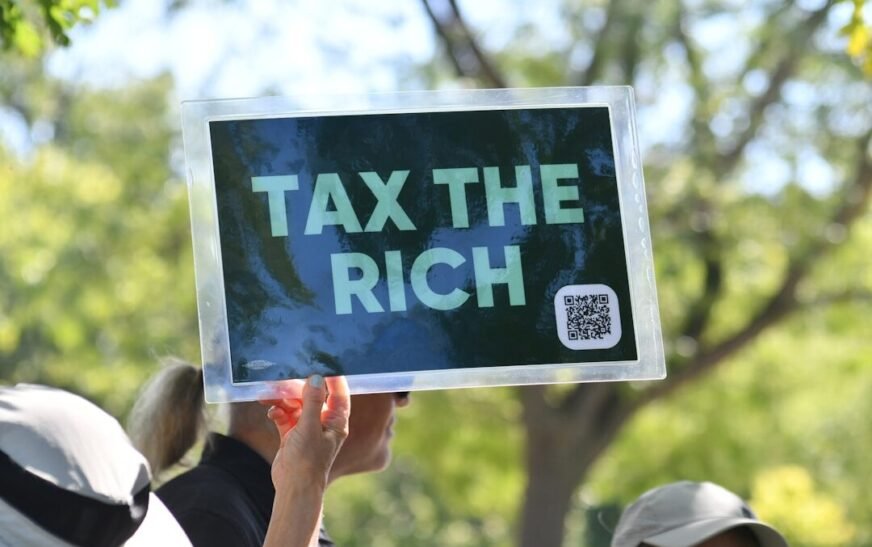
California voters are moving closer to a major decision over whether the state should impose a one-time billionaire tax to help fund health care, education, and food assistance programs. The California billionaire tax, backed by SEIU United Healthcare Workers West, would impose a 5% tax on the accumulated wealth of residents with a net worth of more than $1 billion.
Supporters say the measure could raise about $100 billion at a time when health programs and public services face budget pressure. Critics warn that a state-level wealth tax could be difficult to enforce, invite legal challenges, and push some of California’s richest residents to relocate.
What the California billionaire tax would do

The proposal, formally known as the 2026 Billionaire Tax Act, would create a one-time tax on accumulated wealth rather than annual income. It is aimed at California residents whose net worth crossed the billionaire threshold on the tax obligation date set by the measure.
Supporters describe the plan as an emergency tax on extreme wealth. The proposed 5% levy would be paid over time, with the revenue placed in a special state fund rather than the general fund.
The measure would direct 90% of the money to health programs and 10% to education and food assistance. Backers say that the structure is meant to protect the funding from being used as a general budget patch while still allowing the Legislature to allocate money to covered programs.
Why supporters say the tax is needed

The campaign behind the measure argues that California is facing severe pressure on health care funding. SEIU United Healthcare Workers West has framed the proposal as a way to protect hospitals, clinics, health care jobs, and access to care for working families.
Supporters say the tax targets a small group of residents with extraordinary wealth while avoiding a broader tax increase on middle-income households. Their argument is that much billionaire wealth is held in stocks, private companies, and other assets that may grow for years without being taxed as income.
That fairness argument is central to the campaign. Backers say California’s wealthiest residents have benefited from the state’s economy, universities, workforce, infrastructure, and technology sector, and that a one-time contribution would help support services used across the state.
Why opponents warn about economic risk
Critics say the measure could create a new risk for a state that already depends heavily on high-income taxpayers. California’s revenue system is sensitive to capital gains, stock market swings, and the income of wealthy residents, which can make state budgets rise and fall sharply.
Opponents also argue that taxing wealth is more complicated than taxing income. Valuing publicly traded stock is relatively simple, but private company stakes, intellectual property, partnerships, trusts, and other assets can be harder to price and easier to dispute.
That concern has fueled warnings about litigation and enforcement costs. Critics say the state could spend years defending the tax in court or fighting over asset values before collecting the full amount supporters expect.
The ballot fight is already expensive

The proposal has already drawn intense political spending and attention from labor groups, wealthy donors, and business-aligned opponents. CalMatters reported that the measure qualified for the November ballot after the Secretary of State verified petition signatures.
Supporters said they gathered more than 1.5 million signatures, far above the number needed to submit the measure for review. Election officials must still rely on validated signatures, not raw totals, but the campaign has cleared the key threshold to move forward.
Opposition has also grown quickly. Gov. Gavin Newsom has opposed wealth tax proposals, arguing that they could drive high-wealth residents and businesses away. Tech figures and business groups have also raised concerns that the tax could weaken California’s ability to compete with states that have lower tax burdens.
What the numbers mean for California
Supporters estimate that the tax could raise about $100 billion. That figure is large enough to make the measure more than a symbolic fight over billionaires, because it would create a major dedicated funding stream for health care, food assistance, and public education-related programs.
The number also explains why the proposal is politically difficult. A $100 billion estimate creates pressure on opponents to explain how California should replace or protect public funding if health programs face cuts, but it also raises questions about whether the state can collect that much without changing taxpayer behavior.
California has more billionaires than any other state, and their wealth is closely tied to technology, finance, real estate, and investment markets. That makes the policy debate especially important because the same group that could generate large revenue may also have the resources to change residency, restructure assets, or challenge the tax.
What comes next for voters

The next stage is likely to turn on whether the measure remains on the ballot and how both sides frame the choice for voters. Supporters will focus on hospitals, clinics, food assistance, education, and fairness at a time when many Californians are struggling with costs.
Opponents will likely focus on tax flight, legal uncertainty, valuation problems, and the risk that the state could lose more revenue than it gains if billionaires leave or shift assets. Their argument is that California should not build critical programs around a tax base that can move.
For voters, the decision will be about more than whether billionaires should pay more. It will test whether California is willing to use a state-level wealth tax as a funding tool, even as policymakers worry about budget stability, economic competitiveness, and long-term confidence in the state’s tax system.
TL;DR
- California’s proposed billionaire tax would impose a one time 5% tax on residents with more than $1 billion in wealth.
- Supporters estimate the measure could raise about $100 billion for health care, education, and food assistance programs.
- The proposal is backed by SEIU United Healthcare Workers West and has qualified for the November ballot after petition signatures were verified.
- Critics warn the tax could be hard to enforce, face legal challenges, and encourage wealthy residents to leave California.
- The vote could become a national test of whether state-level wealth taxes can raise major revenue without weakening economic confidence.