

America’s retirement system is under growing pressure as Social Security approaches a major financing deadline and millions of workers continue to reach retirement age with limited private savings.
President Donald Trump has recently pointed to Australia’s retirement system as a possible model for the United States. At a July 6 event, Trump praised Australia’s approach and said his administration planned to discuss with Congress whether something similar could be implemented for American adults.
Australia combines mandatory workplace retirement savings with a government Age Pension for qualifying retirees. The idea has attracted interest among U.S. retirement experts, but adopting anything similar would raise difficult questions about workers’ paychecks, employers’ costs, and the future role of Social Security.
Social Security faces a 2032 deadline
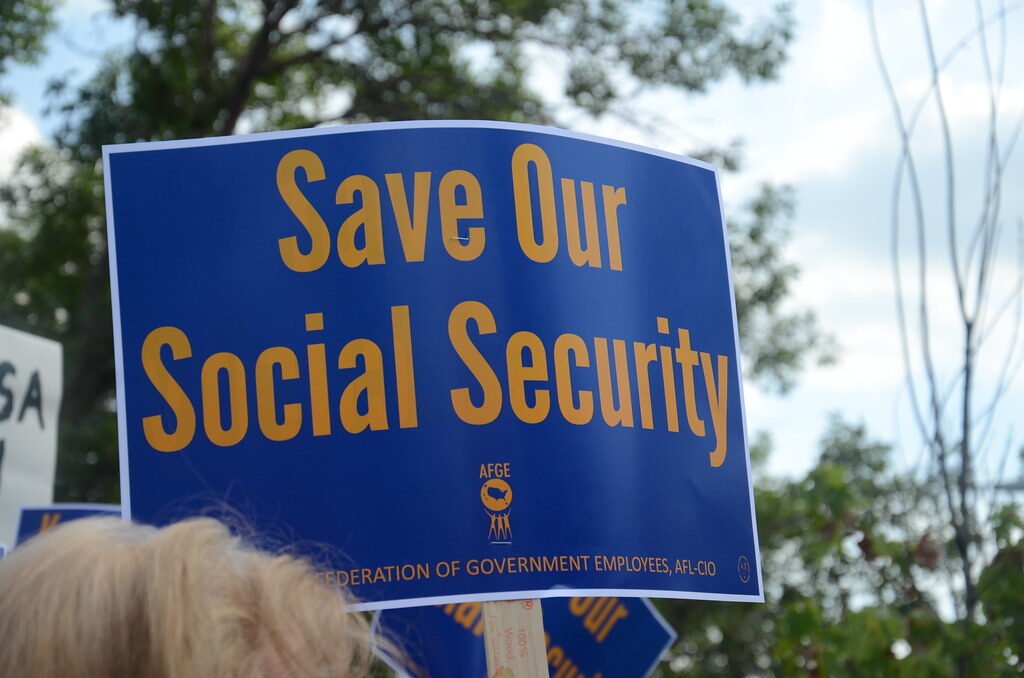
The immediate pressure comes from Social Security’s financial outlook. The 2026 trustees report projects that the Old-Age and Survivors Insurance Trust Fund, which pays retirement and survivor benefits, will exhaust its reserves in the fourth quarter of 2032 if Congress makes no changes.
That would not mean Social Security disappears. Payroll taxes would continue flowing into the program, but continuing income would cover only about 78% of scheduled retirement and survivor benefits at the point of depletion.
If the retirement and disability trust funds were combined, reserves would last until 2034, and continuing income could cover about 83% of scheduled benefits at that time. The distinction matters because the two funds are legally separate under current law.
Australia requires workers to build savings
Australia takes a different approach to retirement saving through its Superannuation Guarantee, commonly known as super.
Employers generally must contribute at least 12% of qualifying employee earnings into retirement accounts. Since July 1, 2026, those contributions generally must be made alongside workers’ regular pay rather than deferred until the end of a quarter.
The money is invested and remains associated with the worker as they move between employers. That means private retirement savings are automatically built for most employees, rather than relying primarily on whether workers voluntarily sign up for a workplace plan.
Australia also provides a safety net
Mandatory savings are only one part of the Australian system. The country also provides the Age Pension to older residents who meet income, asset, and residency requirements.
That creates a two-part structure. Workers accumulate individual retirement savings during their careers, while the government pension provides additional support for those who lack sufficient resources in retirement.
International comparisons generally rate the Australian system more highly than the U.S. system. The 2025 Mercer CFA Institute Global Pension Index gave Australia a B+ with an overall score of 77.6, while the United States received a C+ with a score of 61.1.
Trump has publicly praised the model

Trump has not released a detailed proposal to copy Australia’s retirement system, so it would be premature to say mandatory 12% retirement contributions are coming to American workers.
His July comments were more exploratory. Trump said Australia has a plan that people “really like,” described it as successful, and said his administration would talk with Congress about whether something similar could be implemented.
That distinction matters. Any major change involving mandatory retirement contributions, Social Security benefits, or payroll rules would likely require congressional legislation.
For now, Australia appears to be influencing the retirement-policy discussion rather than serving as a finalized blueprint.
TrumpIRA expands access without a mandate
The administration has already taken a smaller step toward broader retirement coverage through TrumpIRA.gov.
An April 30 executive order directed the Treasury Department to create the federal platform by January 1, 2027. It is designed particularly for independent contractors, self-employed workers, part-time employees, and people whose employers do not offer retirement plans.
TrumpIRA.gov says it will connect workers with qualifying low-cost private IRAs and promote the Saver’s Match, which can provide eligible lower- and middle-income workers with up to $1,000 in federal matching contributions.
Unlike Australia’s super system, however, TrumpIRA does not require every worker or employer to contribute a fixed percentage of wages.
Mandatory savings bring a tradeoff

Requiring retirement contributions could greatly increase the number of Americans building assets for old age, but economists disagree about who ultimately bears the cost.
Although Australian employers make the required contribution, some economists argue that mandatory benefit costs can eventually be reflected in slower wage growth or other changes in employee compensation.
That concern matters most for lower-income households. Workers struggling with rent, food, transportation, or childcare may prefer to access more of their income today rather than have additional compensation locked away for retirement.
Supporters counter that voluntary systems leave too many workers with inadequate savings and that automatic or mandatory contributions protect people from retiring with little beyond Social Security.
An Australian model would not simply replace Social Security
Switching completely from Social Security to Australia’s system would be much more complicated than creating new retirement accounts.
American workers have already paid Social Security payroll taxes while earning legally defined future benefits. Any transition would therefore have to address benefits already promised to retirees and current workers.
Australia’s government Age Pension also serves a different purpose from U.S. Social Security. It is means-tested, whereas Social Security benefits generally depend on a worker’s lifetime covered earnings and payroll tax record.
A possible U.S. reform could borrow individual pieces of the Australian model, such as broader automatic savings, without replacing Social Security itself.
Retirement reform is becoming harder to avoid
The appeal of Australia’s system lies in its ability to address two distinct retirement problems at once: helping most workers accumulate personal savings and maintaining a public safety net for people with limited resources.
America faces weaknesses on both fronts. Millions lack access to employer-sponsored plans, while Social Security’s retirement trust fund is projected to exhaust its reserves in 2032 under current law.
Trump’s interest in Australia does not yet amount to a detailed reform proposal. But with Social Security’s deadline approaching, ideas that once seemed too large for serious debate may receive increasing attention in Washington.
TL;DR
- Trump has publicly praised Australia’s retirement system and said his administration would discuss the model with Congress.
- Social Security’s retirement trust fund is projected to exhaust its reserves in the fourth quarter of 2032.
- Continuing income would then cover about 78% of scheduled retirement and survivor benefits if Congress took no action.
- Australian employers generally contribute 12% of qualifying worker earnings to private retirement accounts.
- Australia also provides a means-tested Age Pension for qualifying retirees.
- The 2025 Mercer index gave Australia a B+ retirement-system rating compared with a C+ for the United States.
- TrumpIRA.gov will expand access to private retirement accounts beginning in 2027, but it does not create an Australian-style mandatory savings system.
- Any major change to Social Security or mandatory workplace retirement saving would likely require congressional action.