

Republican senators are pushing a new immigration bill that would give the Department of Homeland Security broader authority to keep certain noncitizens in detention. At the same time, their cases or removals remain unresolved.
Sen. Katie Britt of Alabama introduced the Keep Our Communities Safe Act of 2026 on August 6 with 13 Republican cosponsors. The proposal focuses heavily on people who have final removal orders but cannot immediately be deported because another country will not accept them.
Supporters argue that people considered dangerous should not be released simply because deportation takes too long. Critics are likely to focus on due process and the constitutional limits the Supreme Court imposed on prolonged civil immigration detention.
The bill would expand detention authority

S. 5337 would change both detention during immigration proceedings and detention after a final removal order.
Before a final removal order, the bill says that some noncitizens could remain detained indefinitely while proceedings continue, subject to specific bond provisions. It would also expand mandatory detention for certain criminal categories.
After a final removal order, DHS would receive additional authority to extend detention when removal remains possible or when officials determine that the person falls into specified public safety or national security categories.
The current law starts with 90 days
Federal law generally provides a 90-day removal period after a final deportation order becomes effective.
During that period, detention is generally mandatory. If the government cannot complete the removal, federal law can allow continued detention or release under supervision, depending on the person’s circumstances.
Supervised release does not erase the removal order. Conditions may include regular reporting, travel restrictions, cooperation in obtaining travel documents, and other requirements imposed by immigration authorities.
The Supreme Court limits prolonged detention
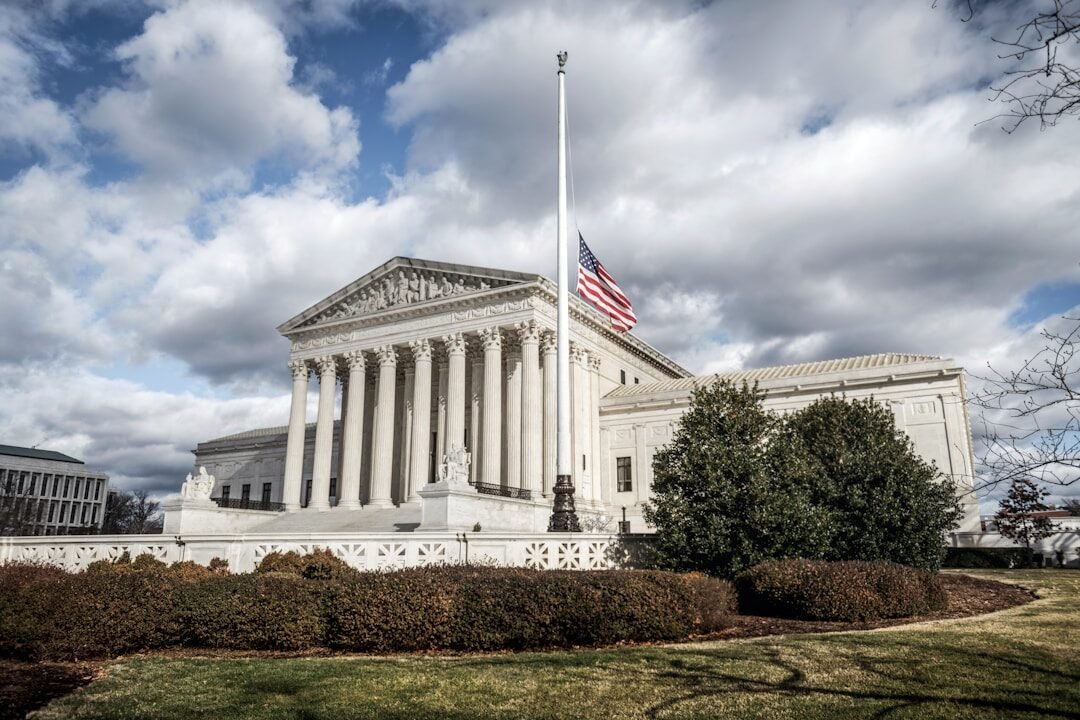
The legal debate centers on the Supreme Court’s 2001 decision in Zadvydas v. Davis.
The Court ruled that the post-removal detention statute does not permit potentially indefinite detention when deportation is no longer reasonably foreseeable. It established 6 months as a presumptively reasonable period for post-removal detention.
After 6 months, a detainee can provide a good reason to believe there is no significant likelihood of removal in the reasonably foreseeable future. The government can then respond with evidence showing that deportation remains realistically possible.
Six months does not guarantee release
The Supreme Court did not create an automatic release date at exactly 6 months.
A person can remain detained beyond that point when the government can demonstrate that removal is still reasonably foreseeable. The length of previous detention also matters when courts evaluate how realistic future removal remains.
The rule is particularly important when a person’s home country refuses repatriation or the government cannot obtain the necessary travel documents.
Britt and her supporters describe that framework as a loophole that can result in people with criminal histories being released even though they remain subject to removal orders.
Certain cases could remain detained longer

The bill establishes several circumstances in which DHS could continue detention beyond the normal removal period.
Those include situations in which officials determine that removal is likely in the reasonably foreseeable future, that the individual has failed to cooperate with removal efforts, or that release would create particular national security or public safety concerns.
The proposal also covers certain people with highly contagious diseases, aggravated felony convictions, crimes of violence, or circumstances that DHS says create a danger to another person or the community.
Some of those detention decisions would need to be reconsidered every 6 months.
Bond would become harder to obtain
The legislation would also change rules for people seeking release on bond while immigration proceedings are pending.
Under the proposal, an eligible detainee would have to establish by clear and convincing evidence that they are neither a flight risk nor a danger to another person or the community.
That places a significant burden on the person seeking release.
Certain people covered by mandatory detention provisions would not be eligible for bond at all. The bill also says that people whose post-removal detention is extended under specified provisions would not have the right to seek release at a bond hearing.
Administrative reviews would remain
The bill would create a DHS review process for some people who cooperate fully with efforts to carry out their removal.
Officials would consider evidence from the detained person, as well as information from the State Department and other federal agencies, regarding whether removal is realistically possible.
If DHS determined that continued detention was justified on public safety or national security grounds, certain certifications could be renewed every 6 months.
The bill would still leave federal habeas corpus proceedings available in some circumstances, meaning courts could remain involved in challenges to prolonged detention.
The proposal is not yet law
The Keep Our Communities Safe Act was referred to the Senate Judiciary Committee after its introduction on August 6.
Similar versions of the proposal have appeared repeatedly in Congress since 2011 without becoming law. Britt also introduced a version during the previous Congress.
For the 2026 proposal to take effect, it would need to pass both the House and Senate in matching form and be signed by the president.
Even if Congress approves it, provisions allowing lengthy detention could face constitutional challenges because Zadvydas was based partly on concerns about detention without a reasonably foreseeable end.
TL;DR
- Sen. Katie Britt introduced S. 5337 on August 6, 2026.
- The bill would expand DHS authority to detain certain noncitizens during and after removal proceedings.
- Current law generally provides 90 days for carrying out a final removal order.
- Zadvydas v. Davis established 6 months as a presumptively reasonable period for certain post-removal detention.
- The 6-month mark does not automatically require a person’s release.
- The bill would allow longer detention in specified criminal, public safety, national security, and removal-related cases.
- Eligible detainees seeking bond would generally need to prove, by clear and convincing evidence, that they are not a flight risk or a danger.