16 Best Spice Cabinet Organization Ideas to Stop the Mess
You reach for paprika and end up pulling out three other jars first. Tiny bottles tip over, labels face the wrong way, and somehow the one spice you need is hiding in the back.
It’s annoying to discover you bought a second cinnamon because you couldn’t see the first one. Expired seasonings sit unnoticed, taking up space on already crowded shelves.
That small cabinet should make cooking smoother, not slower. When your spices are scattered and hard to find, even simple meals feel more complicated than they need to be.
Spice cabinet organization ideas for better visibility

Spice cabinet organization ideas work best when they focus on clear sightlines and steady access. Arranging jars by category or alphabet, and turning the labels forward, helps you grab what you need without digging. A quick check for expired seasonings also frees up valuable room right away.
Storage upgrades can also make a noticeable difference. Tiered inserts, drawer-style racks, or uniform containers prevent bottles from sliding and getting lost behind taller jars. With a thoughtful layout, your spice cabinet becomes easier to maintain and less likely to fall back into chaos.
1) Quiet grid perfection
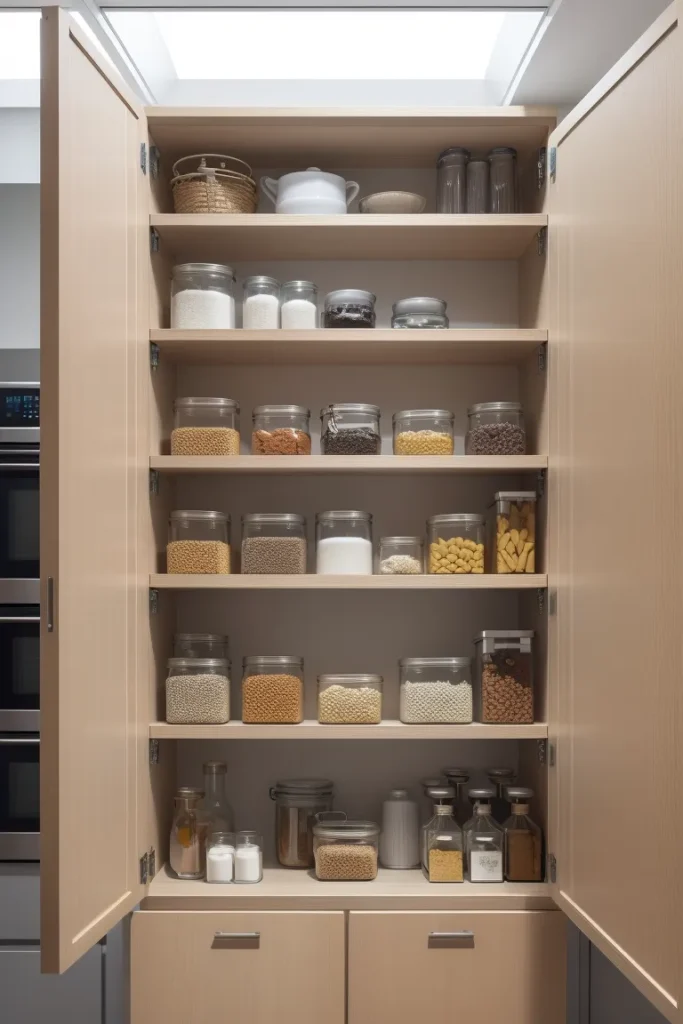
An order feels restful when every item follows a single rule. Match containers. Match lids. Match labels.
Clear glass keeps the cabinet light, while a single dark accent matte caps or thin black type adds structure. Arrange jars in a true grid, so the eye reads calm, not clutter.
Keep daily spices closest to hand. Place rarely used blends slightly higher. Add one slim riser so the back row stays visible without stacking.
2) Warm wood calm
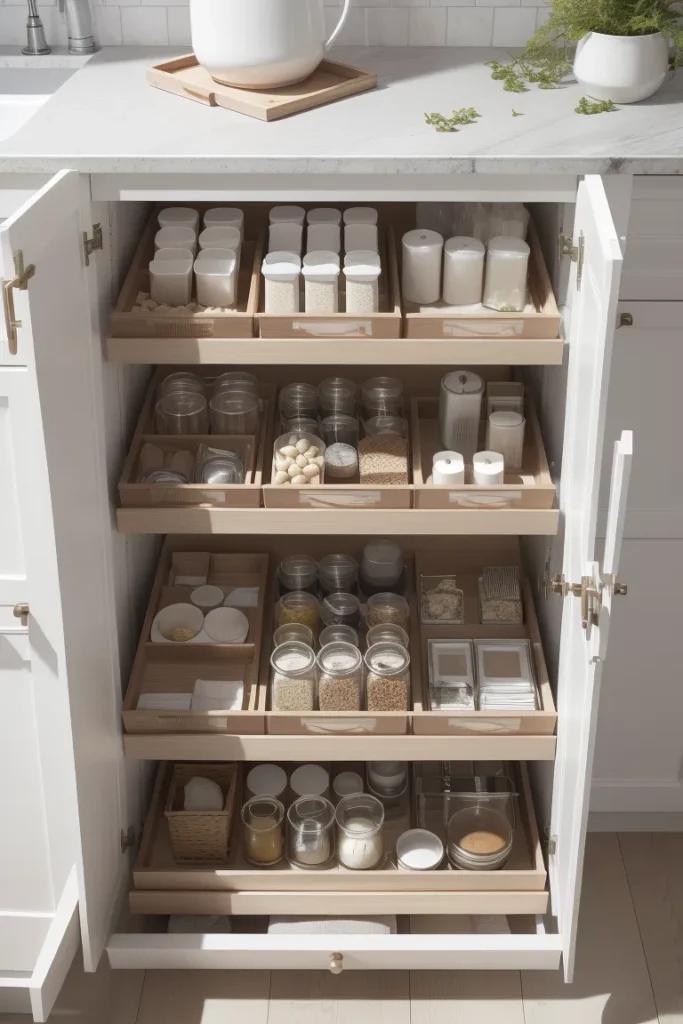
Soft order feels welcoming. Choose clear jars with light wood lids and creamy labels. Nothing harsh. Nothing shiny. Add shallow wood trays to keep spices grouped even when the cabinet gets busy. Tray slides out. Picks become easy. Tray slides back.
Keep palette quiet: warm white, sand, pale wood, tiny hint of charcoal for readability. Group spices by comfort cooking—soups, baking, breakfast blends, cozy dinners. A small woven basket holds odd packets, so shelves stay clean. Linen-textured shelf liner reduces slipping and clinking.
3) Stone-and-wood balance
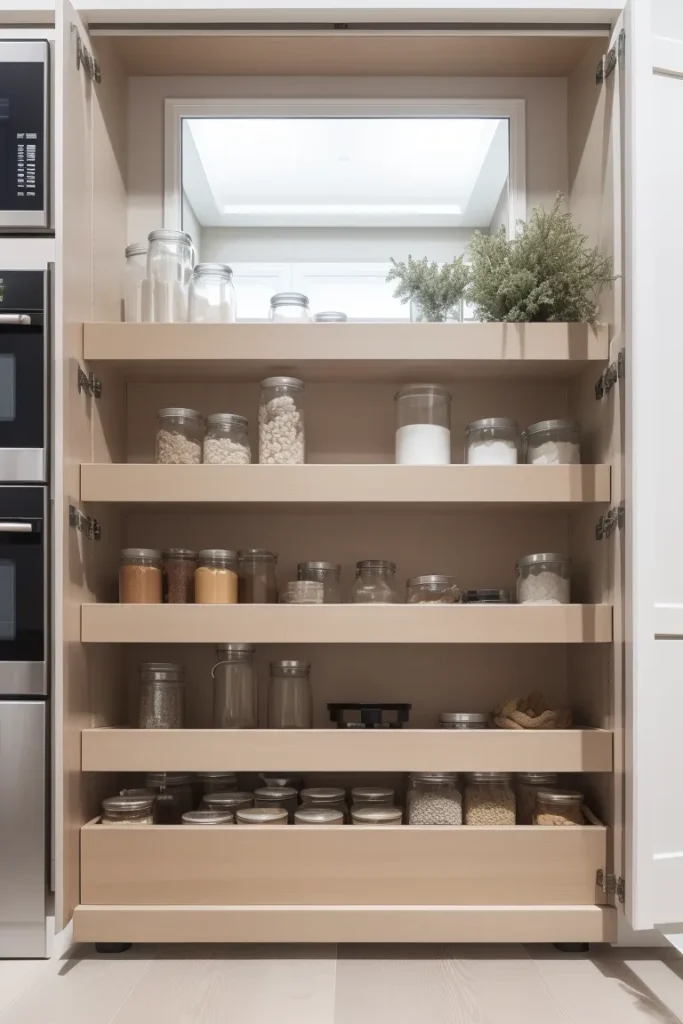
A cabinet can feel grounded, not busy. Combine clear jars with pale lids and one stone-look tray that anchors the shelf. Tray adds visual weight so jars feel intentional, not scattered. Labels stay ultra simple, thin black type, plenty of breathing room.
Organize by frequency first. Form second. Powder spices low for quick reach. Whole spices are higher. Larger refill jar sits alone as a “supply zone.” Add one divider per shelf to keep rows straight after hurried cooking.
Lighting should feel soft and indirect. Hide a warm strip behind the shelf lip for a gentle glow. Use taupe liner to reduce glare and keep jar movement quiet. Cabinet opens, and everything feels settled. Calm hands. Calm mind. Works even in tiny spaces because every inch has purpose.
4) Texture-rich calm
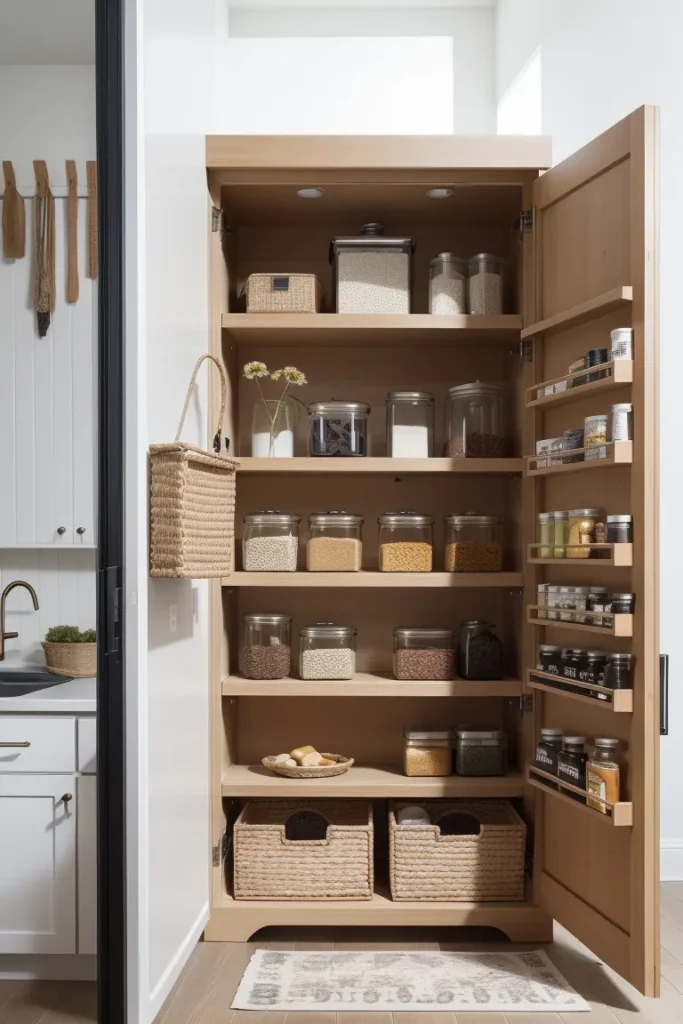
Tidy can still feel relaxed. Add texture so the cabinet looks styled, not sterile. Use clear jars, then group them inside woven baskets or cane-lined bins. Labels stay simple and warm, soft black on cream. A door pocket organizer holds packets and minis, so shelves stay clean.
Use height like a styling tool. Tall grinders at the back. Medium jars center. Short jars front. Add a bamboo riser for visibility and a layered look. A tan liner reduces slipping and keeps shelves quieter. Group spices by flavor: mood, smoky blends, warming spices, bright herbs.
Result feels collected and cozy. Great for rentals because most pieces lift out with zero damage. The cabinet looks finished even without perfect alignment. Reset takes seconds because baskets do the work.
5) Brass and marble polish
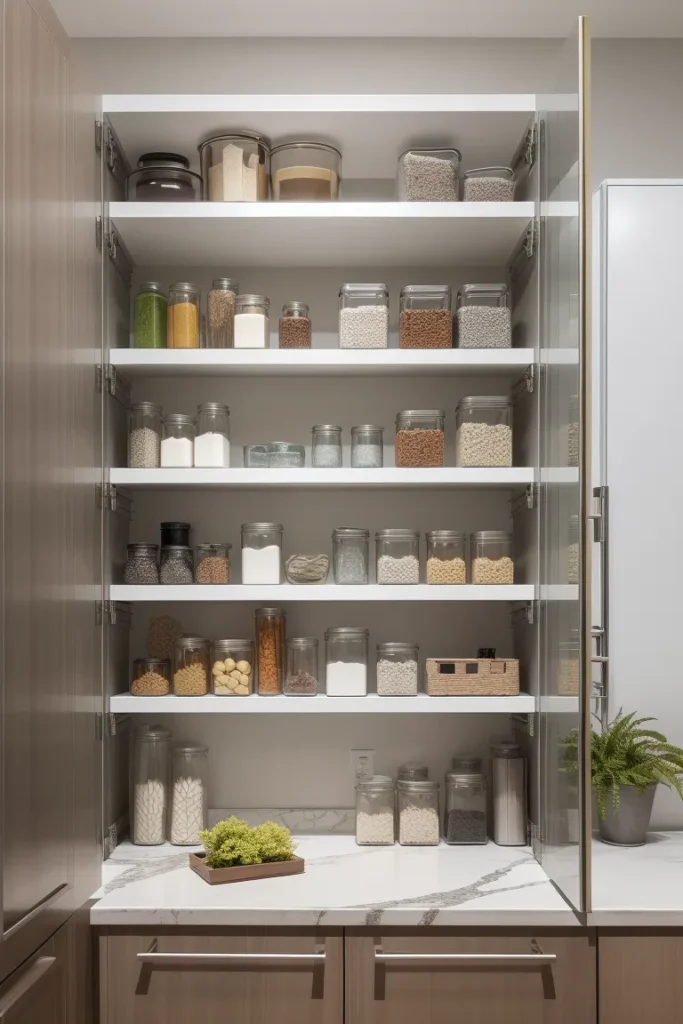
Spices can look like a curated collection. Choose uniform glass jars with brushed brass lids. Add slim marble-look trays so each shelf feels like a display base. Labels stay crisp and small warm white with black type. Clean margins. No visual shouting.
Keep layout premium and practical. Three rows max per shelf. The back row sits on a clear riser, so it floats rather than clutters. The middle row holds daily staples. Front row becomes signature blends. Add a thin rail at the shelf edge to keep the line straight and prevent tipping.
Lighting completes the mood. A warm, dimmable strip gives a soft glow that flatters brass without glare. Cabinet opens, and it feels intentional. High-end, but still fast. Works in small kitchens because reflective finishes add brightness and depth. Reset stays easy because the structure guides placement.
6) Amber apothecary shelf
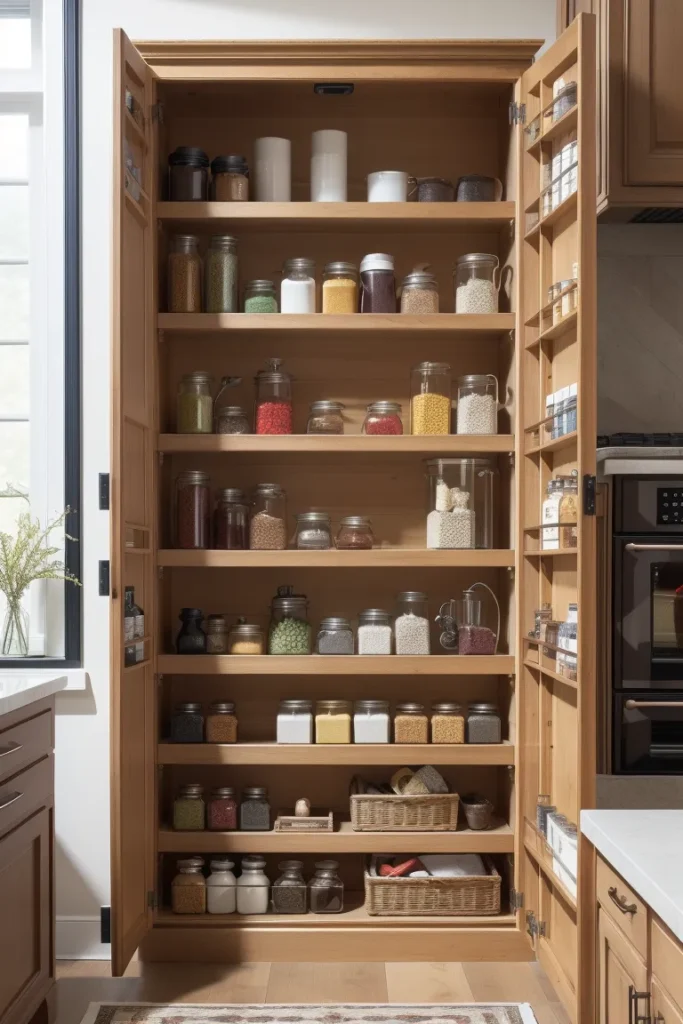
Collected charms can still be organized. Use amber glass jars or clear jars with amber sleeves for warmth and depth. Pair with cream labels and a consistent type style. Add bronze or antique-brass lids for a quiet vintage glow.
Make the cabinet functional with gentle layering. Daily spices sit on a low walnut riser so labels face forward. Whole spices and refills live above in matching tins, neat and stackable. Keep a small wooden caddy inside the cabinet for a funnel, a scoop, and extra labels. Refills stop feeling messy.
Lighting should feel like late afternoon. A warm LED at the top brings amber to life and makes the cabinet feel cozy, not dark. Add cocoa-toned liner to reduce glare. Result feels curated, like a small pantry collection, yet still quick to use. Perfect for traditional kitchens, older homes, or anyone who loves warmth and story.
7) Bin-and-label farmhouse ease
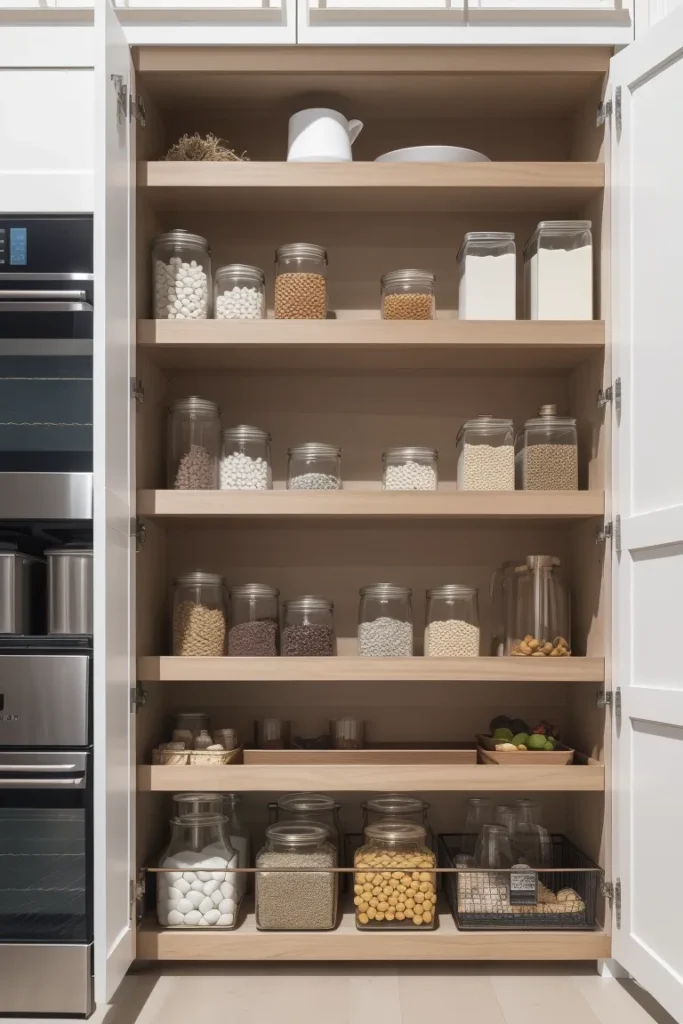
Busy kitchens need forgiving organization. Use clear jars, then place them into labeled wooden bins so shelves stay calm without perfect alignment. Bins slide out like drawers. Jars stay grouped. Cabinet stays tidy even after fast cooking.
Choose warm wood tones and simple matte lids, black or galvanized look. Labels on bins do the heavy work. Keep categories broad and practical: daily, baking, grilling, extras. Add one tall crock or tin for packets and odd shapes so they never spill across the shelf. A soft beige or check liner adds texture and prevents sliding.
Lighting can stay natural, but a small warm puck light helps at night. Result feels sturdy and homey. Reset is simple. Slide bins back. Close the door. Done. Great for families because the system works with real life, not against it.
8) Loft-ready metal alignment
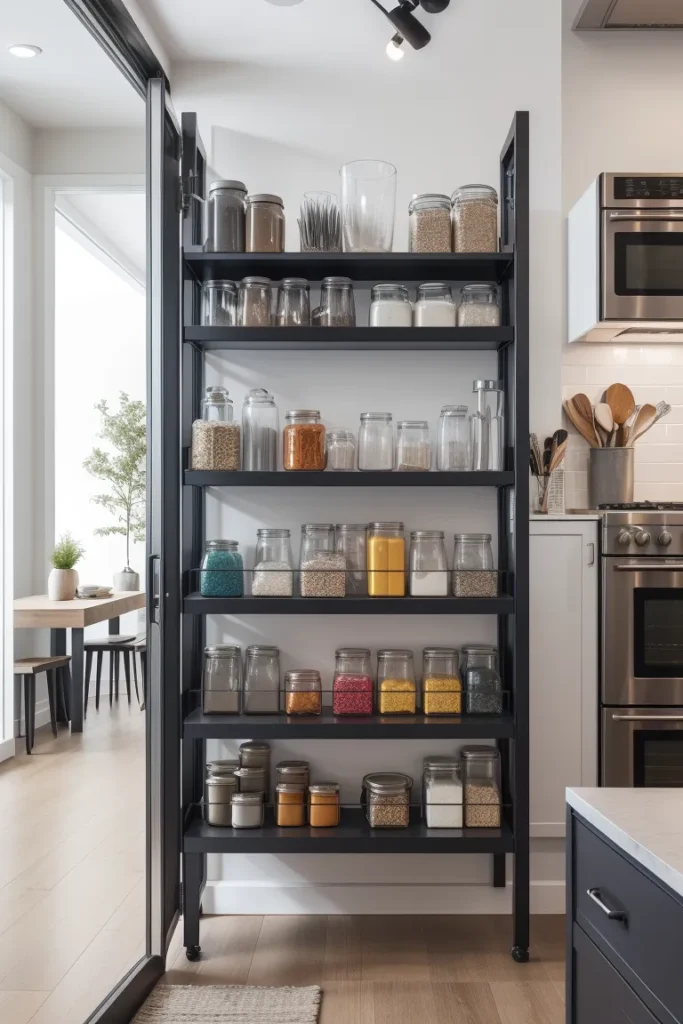
Sharp organization can feel modern and tough. Use clear jars with gunmetal lids, and add slim metal rails along the shelf edges to keep the jars locked in straight lines. Dark wood shelf inserts add warmth, keeping the look bold but not cold. Labels stay minimal, white on charcoal or black on warm gray.
Build a layout that works like a prep station. Bottom shelf holds a daily set. The middle shelf holds specialty blends. The top shelf holds refills in taller, slim canisters. Add a magnetic strip on the cabinet side wall for metal spoons or small tins. Tools stay visible. Easy grab.
Lighting should be clean and bright. Neutral-white LED improves readability and enhances metal finishes. Cabinet opens, and everything feels purposeful. Durable. Fast. Low-maintenance. Great for apartment kitchens where every inch needs to perform.
9) Sea-glass freshness
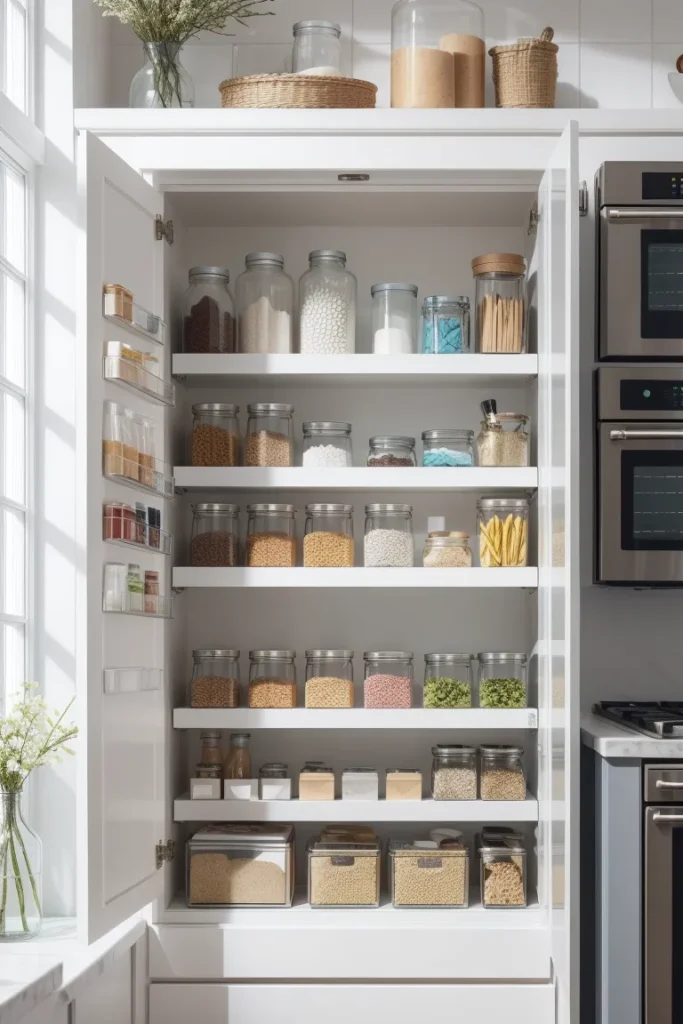
Light organization feels refreshing. Use clear jars with soft white lids and keep labels calm sand tone with clean black type. Add a subtle sea-glass accent through a pale aqua liner or a tinted tray. One soft color is enough. Cabinet stays bright and open.
Build a simple two-level shelf. The back row sits on a white acrylic riser, so everything stays visible. The front row holds a daily set. Keep baking, and herb blends inside one shallow white bin for easy pull-out access. Add a small lidded jar for packets to keep loose clutter to a minimum.
Lighting should feel like daylight. A neutral-warm strip gives clarity without harshness. Add a tiny rope handle detail to the bin for coastal texture, without themed décor. Cabinet opens, and the mood feels clean. Breezy. Easy. Great for small spaces because light tones visually expand the cabinet.
10) Sun-warmed earth tones
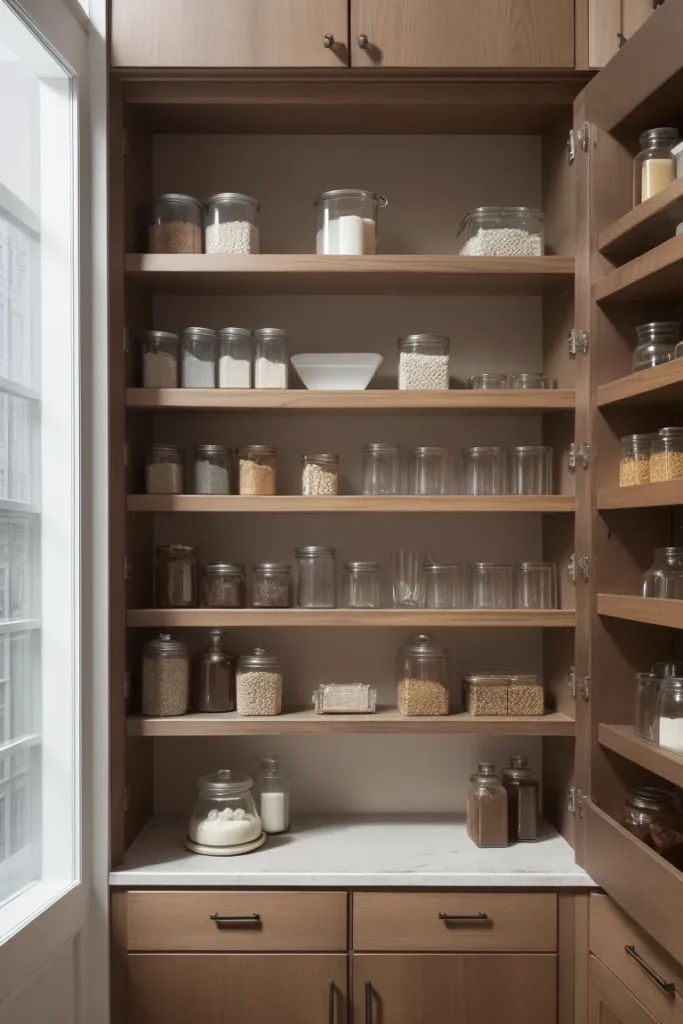
Warm cabinets feel inviting. Use clear jars with clay-toned lids or natural wood lids. Keep labels warm cream with deep brown text, or terracotta paper with simple black type. Add olive-wood trays to hold rows so everything looks curated, not crowded.
Organize by flavor family. Herbal and bright blends together. Smoky and paprika blend together. Sweet baking spices together. Keep whole spices inside matching tins on the top shelf for tidy stacking. Add one small crock for cinnamon sticks or cardamom pods. Loose pieces stop rolling.
Lighting should feel golden. Warm LED glow flatters clay tones and wood grain. A sand liner reduces glare and keeps jars steady. Cabinet opens, and it feels like a calm pantry moment. Practical, warm, and easy to maintain through real cooking.
11) Walnut shadows and ink
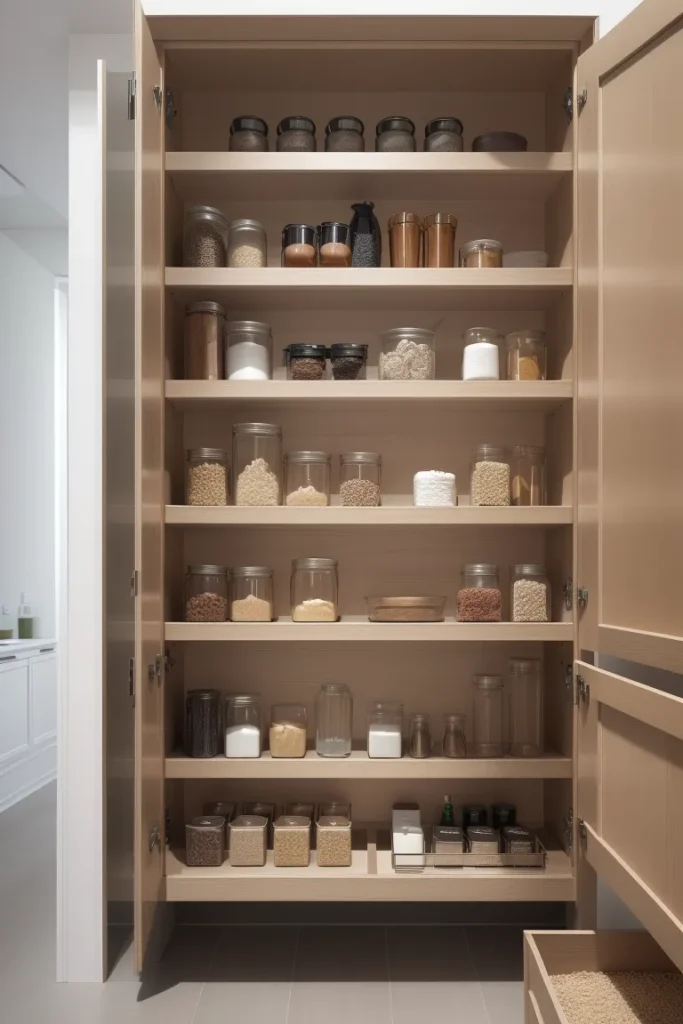
A darker cabinet can feel elegant, not heavy. Use tinted glass jars or clear jars with deep lids. Add ivory labels with crisp black type for an “ink on paper” feel. Bring in walnut shelf inserts or a dark liner to create depth. Cabinet suddenly feels designed.
Keep layout disciplined. Two rows per shelf. Back row lifted with a low riser so labels stay visible. Add slim brass dividers to keep lines straight after fast cooking. Refills and tools hide inside a small lidded box, so the shelf surface stays clean.
Lighting should be warm and soft. A hidden strip creates a glow, not a spotlight. Shadows look intentional. Cabinet opens, and the mood feels curated. Still practical. Still quick. Great for homes with darker finishes, or anyone who loves sophisticated contrast without clutter.
12) Tonal beige harmony
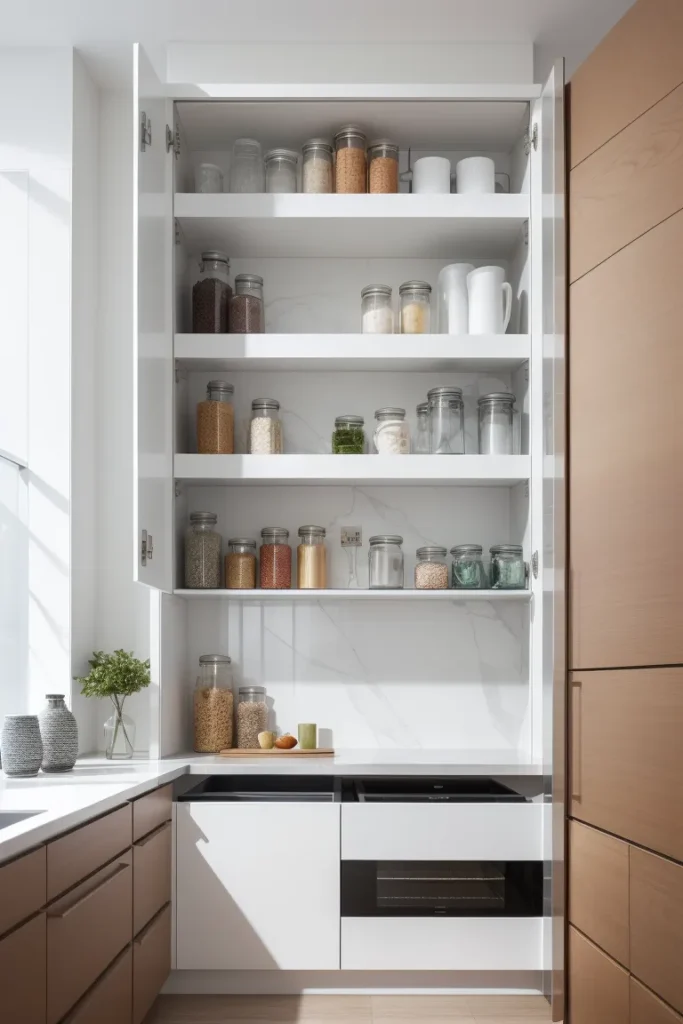
Neutral cabinets feel calm because nothing competes for attention. Use clear jars with beige, stone, or warm-white lids. Keep labels tonal black on oatmeal, or warm gray on cream. Contrast stays soft yet readable. Add a matte sand liner to make shelves feel uniform and prevent jars from sliding.
Structure comes from trays, not fuss. One shallow tray per category keeps the cabinet tidy, even when jars are moved daily. Add a small riser to improve back-row visibility, then leave one small open zone for “in use” jars. System stays realistic. No guilt.
Lighting should be warm and low-glare. A tiny puck light or under-shelf strip works well. Soft light enhances beige tones and makes labels easy to read. Cabinet opens, and the mood feels settled. Simple. Grounded. Easy to maintain in any home style.
13) Graphic color navigation
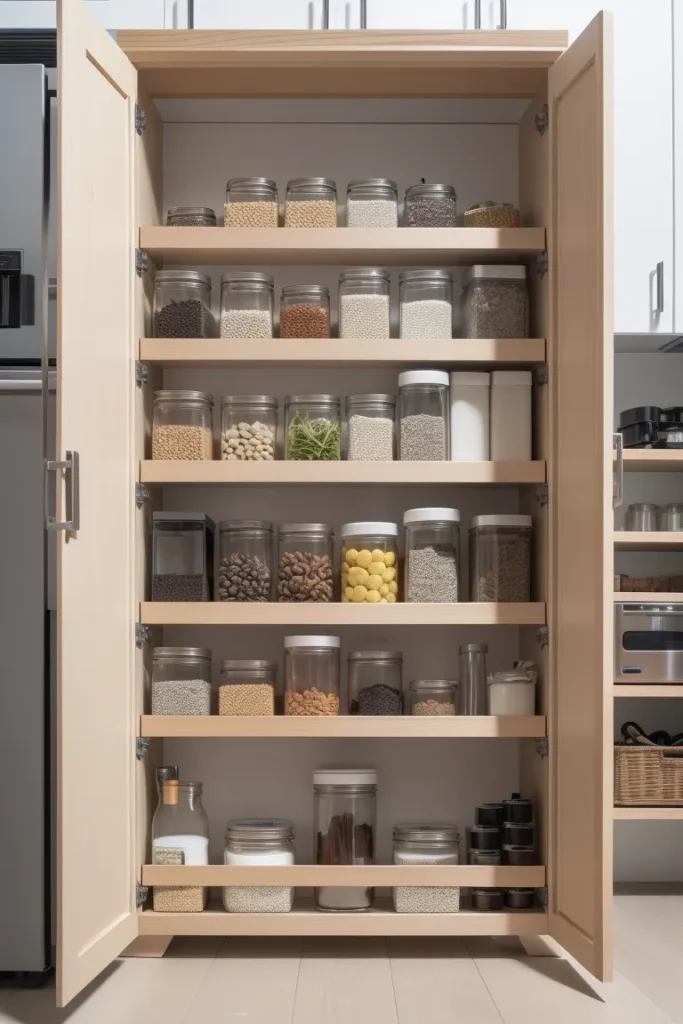
Playful can still feel organized when color is controlled. Start with uniform, clear jars and simple white lids. Add color only as navigation thin bands, tray bases, or shelf strips. One color per group: green herbs, red heat, blue baking, yellow blends. Labels stay consistent and minimal, keeping the cabinet clean.
Keep structure crisp. Two rows per shelf. Back row on a clear riser. Use slim dividers to keep colors separated, not mixed. Build a “core shelf” for daily spices in one dominant color group. Everything else goes higher.
Lighting should be bright and true. Neutral-white LED makes color look fresh, not muddy. The cabinet opens, and it feels energizing. Easy. Kids can help, too, because color cues guide selection. Great for small kitchens that need quick visibility and a little joy.
14) Door-wall DIY upgrade
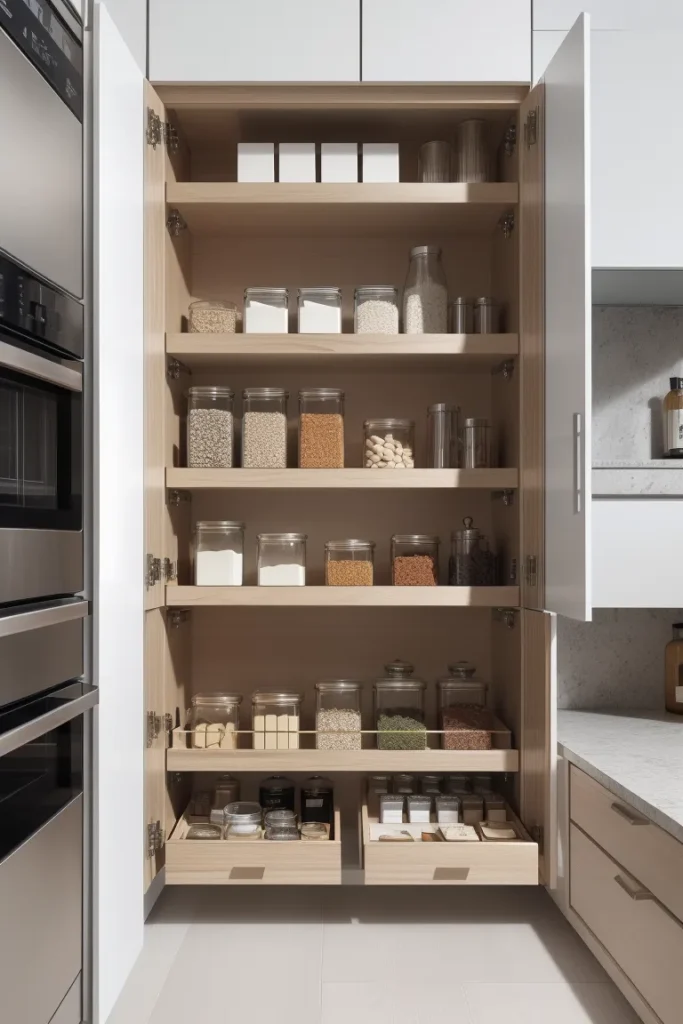
Small cabinets hide unused space. The door interior is often empty. Turn it into a storage wall with a pegboard, rail grid, or modular hook system. Jars stay light and uniform. Small, clear jars with screw lids work best. Hooks hold tools. Mini baskets hold packets. Shelves stay calmer because the door carries the extras.
Keep the main shelf simple. One shallow tray for daily spices. One bin for refills. Labels can be printed at home and kept consistent. Paint the pegboard warm white or soft beige, so it blends and looks intentional.
The result feels like clever engineering, not expensive renovation. Great for rentals if mounted with strong, removable strips or a tension frame. Cabinet opens, and storage appears instantly. No digging. No wasted air space. Cleanup becomes quick because every item has a visible home.
15) Suite-level drawer insert
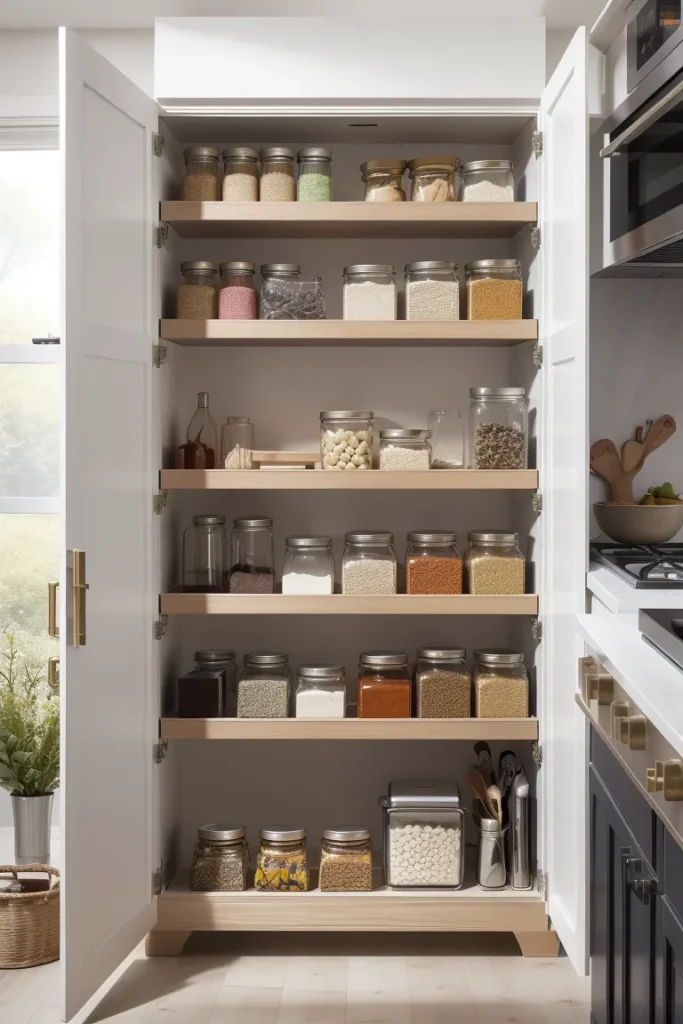
Cabinet spices can behave like a luxury drawer. Add an angled insert or stepped rack so jars tilt slightly, and labels face up. One glance shows everything. No stacking. No lost jars. Choose matching jars with satin lids—white, black, or brushed nickel. Labels stay minimal and consistent.
Divide and insert into sections: daily set in front, specialty blends behind. Keep refills in a slim bin nearby. Add a small lidded box for funnels and label extras so the setup stays clean in the long term.
Lighting should be even and soft. A hidden strip under the shelf lip creates a smooth wash, like a hotel closet. The cabinet opens, and it feels calm and premium. Works in modest kitchens, too, because the insert creates order without remodeling. Reset becomes automatic because of the rack guides’ placement.
16) Heritage metal with modern restraint
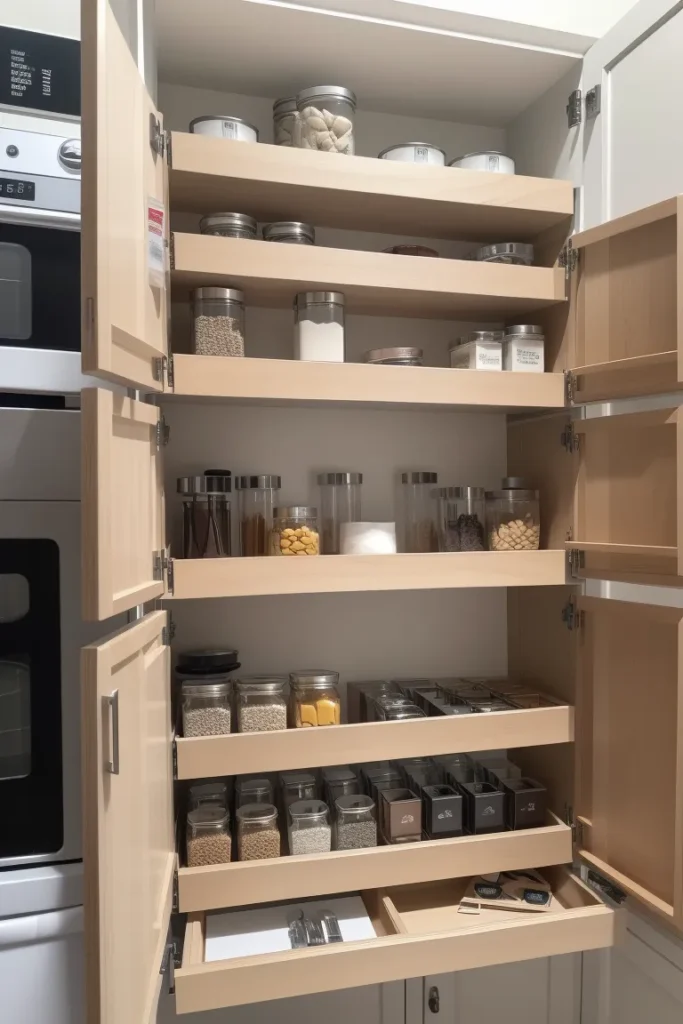
A personal pantry can feel elevated without feeling busy. Use clear jars for visibility, then bring warmth through uniform brass lids or a row of small brass tins for whole spices. Labels stay calm cream with black type so metal becomes the accent, not the noise.
Add one patterned detail with restraint. A removable perforated panel on the cabinet back or a slim tone-on-tone tray adds texture without turning the cabinet into a décor overload. Organize by cooking flow: tempering spices together, masala blends together, baking spices together. Whole spices stay in matching tins on the top shelf for tidy stacking.
Warm light flatters brass beautifully. A soft LED strip makes the cabinet glow and keeps labels readable. Result feels refined, familiar, and very functional. Works in modern homes, rentals, and family kitchens because upgrades are mostly removable, yet look intentional and finished.
Bottom line
An organized spice cabinet saves more than a few seconds during dinner prep. It reduces duplicate purchases, reduces waste from expired seasonings, and makes everyday cooking feel more relaxed. When everything is visible and within reach, you spend less time searching and more time focusing on the meal itself.
Start by clearing out what you no longer use, then create a layout that fits your cooking habits. Small changes in this one cabinet can improve how your entire kitchen functions, helping you stay consistent and confident every time you open the door.