
Small kitchen appliances make cooking easier, but they can quickly take over the counter. Toasters, blenders, air fryers, and coffee makers often compete for the same limited space. When everything stays out all the time, the kitchen can start to feel crowded and messy.
Smart storage makes a big difference. When appliances have a proper place, your kitchen looks cleaner, and daily cooking becomes easier. You can still keep your favorite tools nearby without letting them dominate your workspace.
18 Perfect Kitchen Appliance Storage Ideas
Many appliances are used daily, while others are used only occasionally. The key is choosing storage that keeps frequently used items accessible while tucking away the rest.
The ideas below focus on simple, practical ways to store kitchen appliances without losing valuable counter space. From cabinet solutions to clever shelving, these options can help keep your kitchen organized and easy to use.
1) Flip-up power wall for appliances
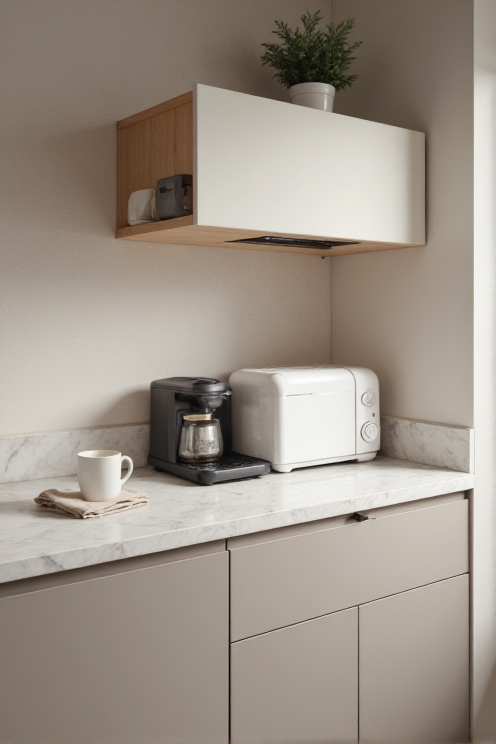
Kitchen counters stay busy. Coffee machine, toaster, blender, kettle all fight for the same patch of space. A flip-up power wall turns one narrow strip into a full “appliance lane” that disappears when not in use. A shallow cabinet sits right on the counter, only a few inches deep.
The interior features a continuous power strip, slim shelves, and cord channels. Front panel flips up on soft hinges while you prep, then folds down to create a smooth facade.
2) Lift-up mixer dock drawer
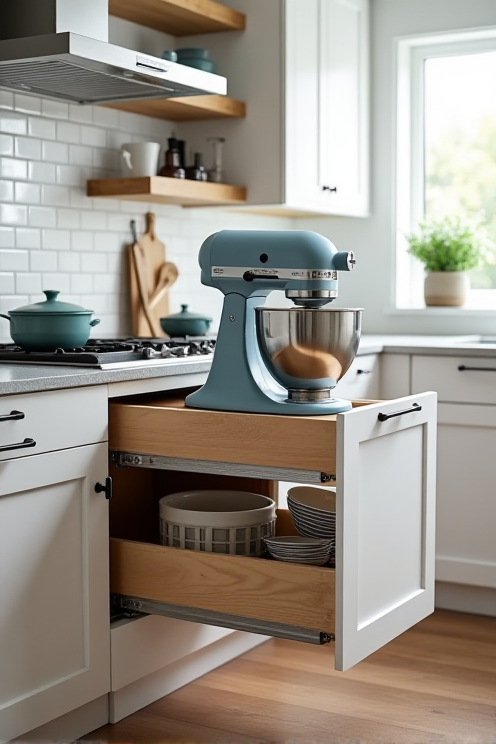
Stand mixers look beautiful yet feel heavy, especially in a compact kitchen. A lift-up mixer dock hides weight under the counter while keeping the appliance ready in seconds. Drawer-style platform lives inside a base cabinet.
When needed, platform slides out and rises to worktop height on a lift arm. Mixer stays strapped to the platform, so no lifting, no dragging. When baking session ends, dock lowers and glides back inside.
3) Sliding air-fryer garage in tall pantry
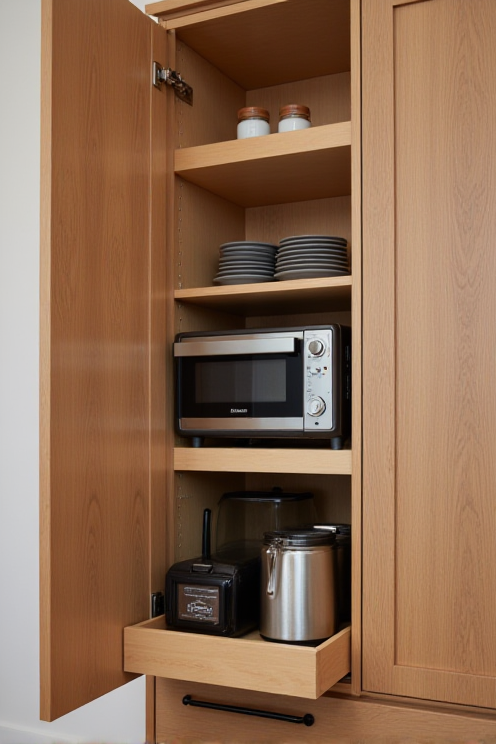
Bulky air fryers and toaster ovens often float around counters with no real home. A sliding air-fryer garage turns a tall pantry into a mini appliance bay. Inside the pantry, one mid-level shelf becomes a deep pull-out tray with full-extension runners, a custom power outlet, and vent gaps along the back.
Door closes flush when not in use. For cooking, tray slides out completely so heat and steam move away from cabinetry.
4) Corner carousel tower for small appliances
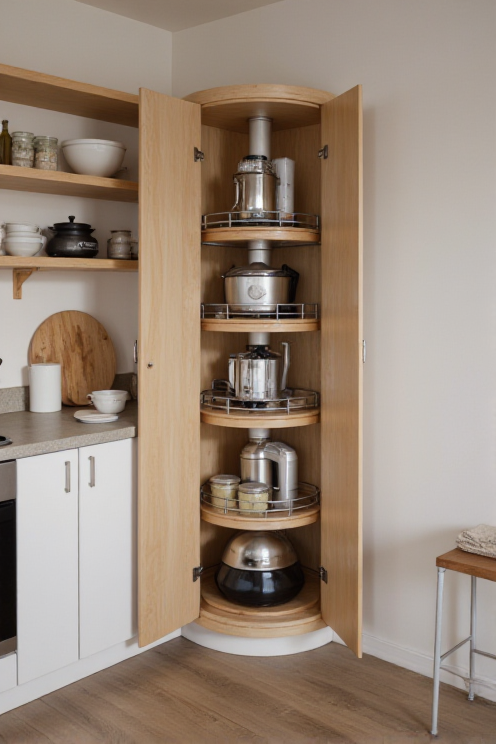
Corners often trap dead space in kitchens. A corner carousel tower unlocks that space for appliances. Inside a corner cabinet, full-height rotating shelves store slow cooker, rice cooker, blender, food processor. Each platform spins independently so every piece can move forward without lifting others. Front doors hide everything but open wide enough for full access.
Storage behaves almost like a rotating display but fully enclosed. Heavy appliances sit on lower levels, lighter ones above. Turntable-style hardware can carry real weight and keeps depth usable, instead of losing items into dark corners. Cables wrap into small hooks around the central pole, waiting for you to bring an appliance to the counter. All the gear that usually clutters top surfaces now parks in one turning tower.
5) Under-cabinet flip-down mini appliances rail
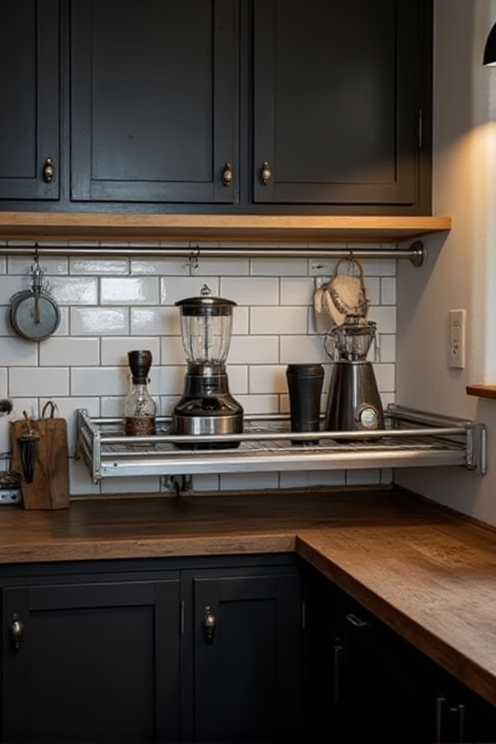
Not every appliance needs full counter footprint. A flip-down mini rail under wall cabinets holds tiny gadgets in suspended mode. Think electric frother, handheld mixer, spice grinder, compact smoothie blender base. Rail runs along the underside of the upper cabinets. Small brackets or dock clips hold appliances upside down or sideways. When needed, section flips down and locks into place. After use, it folds back, keeping tools off counters entirely.
Perfect for micro-kitchens where every inch matters. Also helps neurodivergent or busy users who rely on visual cues: tools stay visible, just tucked up. Cord organizers keep wires flush against the wall. Lower counter stays clear for chopping and plating.
6) Drawer-within-drawer appliance nests
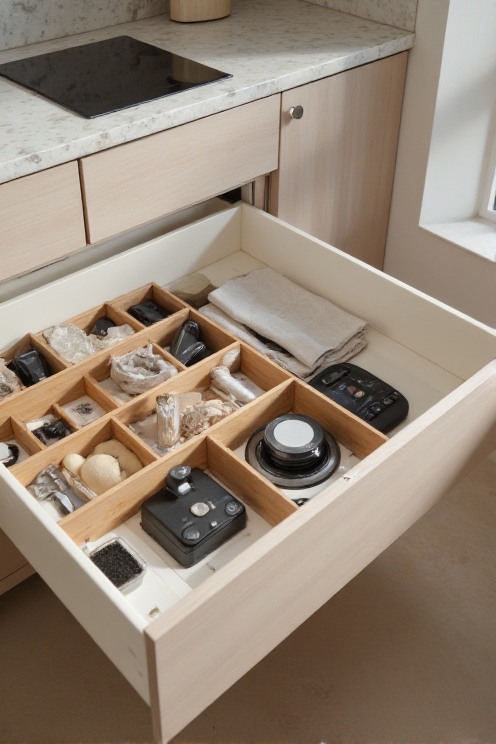
Deep drawers swallow chargers, cords, lids, attachments. Drawer-within-drawer appliance nests bring order. Large drawer holds appliance bodies: blender base, hand mixer, immersion blender, food processor. A shallow secondary drawer glides inside the same front, riding above. It stores blades, whisks, cups, extra jars. Open once for main drawer, again for top layer. Everything stays in one vertical envelope.
Idea eliminates random baskets all over the kitchen. Each appliance family has its own “nest.” Front labels or subtle icons help everyone in the home put things back in correct spot. Drawers pull out fully so you can see everything from above. No more digging at the back of cabinets.
7) Island back-pocket appliance strip
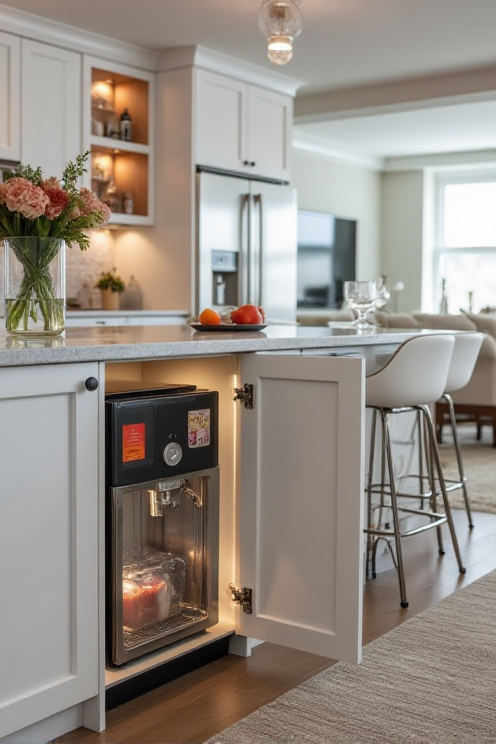
Kitchen islands usually have one side that’s forgotten, facing the living room or hallway. An island back-pocket appliance strip turns that side into hidden storage for appliances. Instead of full-depth cabinets, a shallow run of vertical doors hides tall, narrow compartments. Each compartment holds one slim appliance: a stick vacuum base, a soda maker, a hand mixer, or a juicer. Cord channels route power down through the island where possible.
From main cooking side, counter still feels light. From back side, you open tall, slim doors and slide out what you need. Perfect in open-plan spaces where visual calm matters. Appliances stay near the action but not visible from sofa.
8) Rolling appliance bar
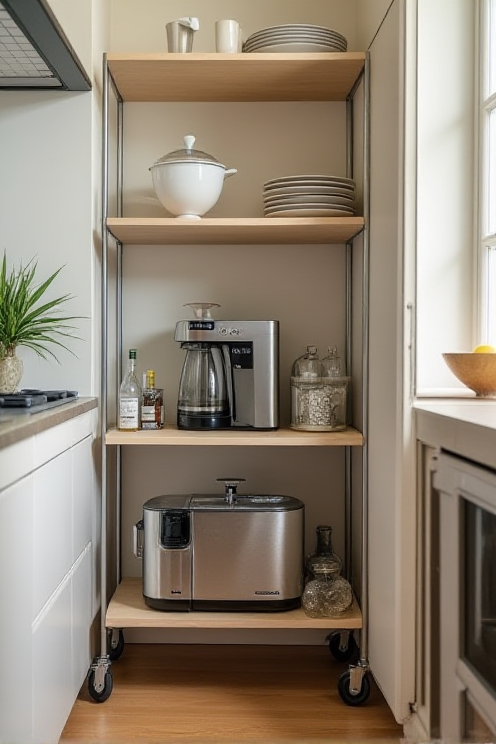
Countertop appliances work hardest during hosting, batch cooking, or meal prep weekends. A rolling appliance bar turns them into a portable station that also parks inside a cabinet. Cart is built to exact width of a tall cabinet opening or niche.
Top holds coffee gear; mid shelf handles the blender and juicer; base takes a rice cooker or slow cooker. When stored, cart slides back into its “garage.” For heavy use, the cart rolls out to sit beside the island or table. Single power strip on cart connects to floor or wall outlet.
9) Toe-kick charging drawer hub
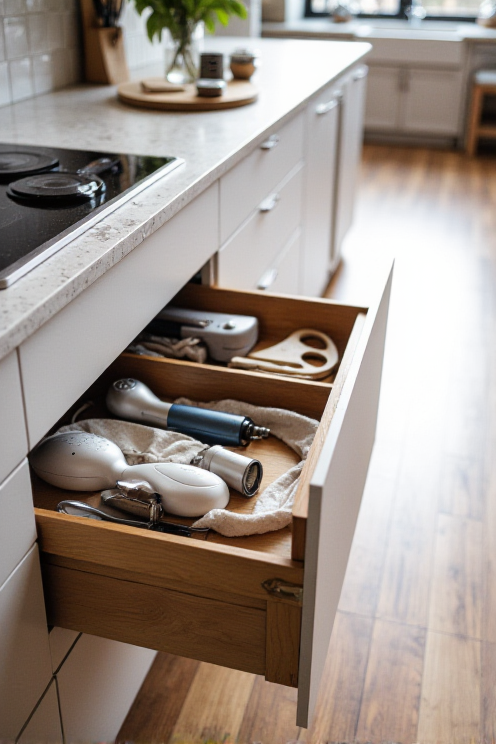
Floor space often goes to waste under base cabinets. Toe-kick charging drawer turns that low strip into a hidden hub for compact cordless appliances. Slim drawer glides out from under cabinets and reveals organized docks for a handheld frother, mini blender, cordless opener, and a stick vacuum battery. Low profile keeps bodies flat, neatly lined, easy to grab. Shallow dividers stop pieces sliding around. Outlet or charging strip runs at back wall, safely away from drawer edge.
Counters feel lighter because small gadgets no longer sit in a messy cluster near sockets. Charging becomes automatic: return each tool to same slot, lid slides shut, kitchen looks composed again. Drawer front blends into toe-kick line, so only a narrow shadow gives clue. Works well in modern remodels because toe-kick zones already accept drawer hardware and wiring can route through base cabinet backs.
10) Over-fridge pull-down appliance bridge
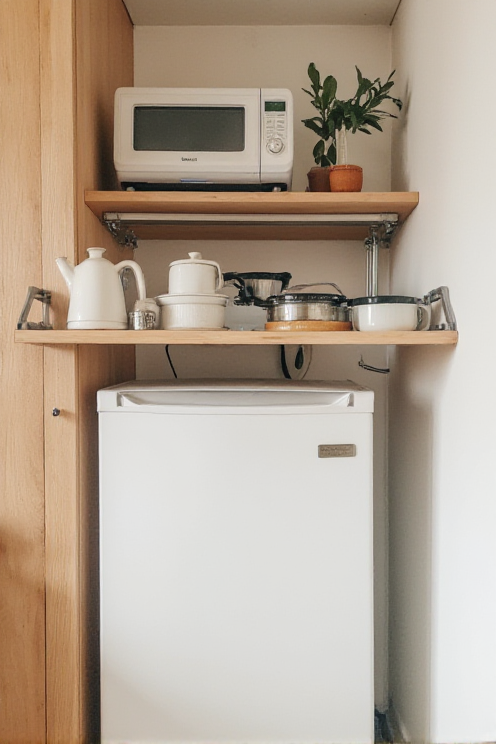
Space above fridge usually feels too high and awkward. Over-fridge pull-down appliance bridge converts that zone into a hardworking bay for medium-size appliances. Cabinet spans over fridge with a deep interior shelf mounted to pull-down hardware. When door opens, shelf drops to reachable height in a smooth arc. Rice cooker, slow cooker, sandwich press, and waffle maker rest on a padded surface, cords clipped along the rear edge.
Once the cooking session ends, appliances go back on the shelf, handle lifts, and hardware pull everything back up into the cabinet. Fridge top no longer catches dust-covered gadgets. Tall wall suddenly becomes productive, especially in small homes where floor cabinets already feel maxed out. Pull-down systems are common in modern pantry and wall designs, so adapting one for appliances keeps idea grounded and realistic.
11) Recessed backsplash appliance niche
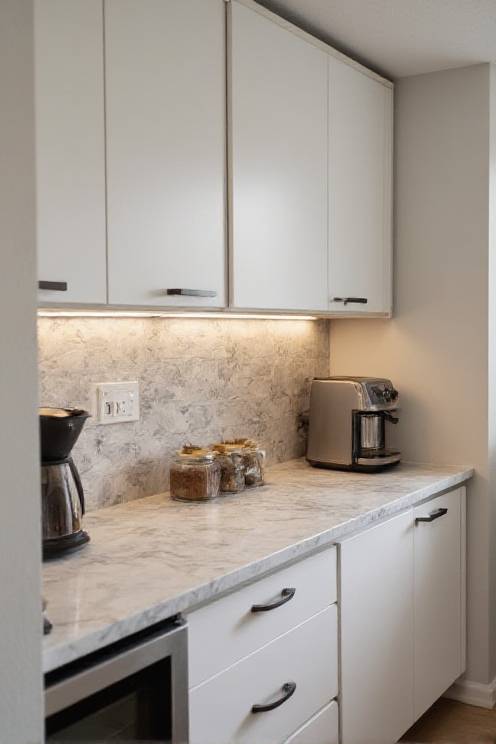
A wall between studs can quietly hold appliances if the depth is used wisely. A recessed backsplash appliance niche carves a shallow cavity into the wall behind the counter, lined with a durable surface and power outlets. Toaster, grinder, slim coffee machine, compact blender slide into this pocket instead of sitting fully on the counter. Front planes stay flush with the counter edge or slightly inset, keeping the line clean. Sliding or pocket doors close in front to create a continuous backsplash when tools rest.
Counters feel deeper instantly because the footprint of appliances partly extends into the wall. Niche can run behind one full zone or stay focused as a coffee corner. Interior finish resists heat and crumbs, making wipe-down quick. For full remodels, recess pairs well with appliance garages already favored in many high-functioning kitchens.
12) Split-level slide-out worktop cabinet
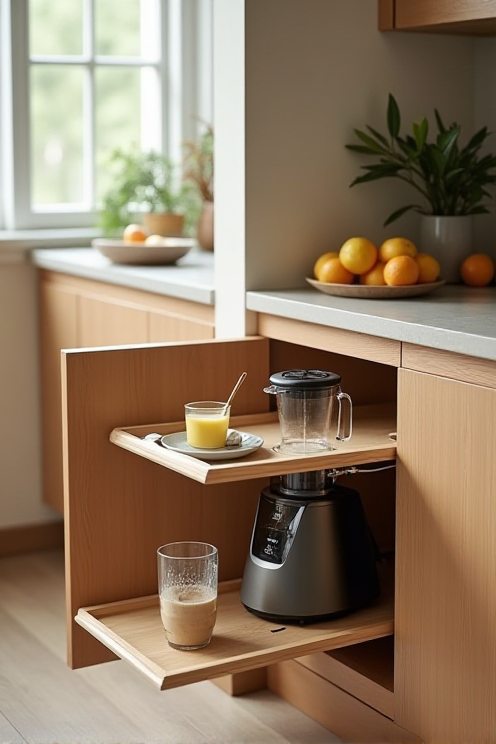
Standard roll-out shelves bring items forward, but still ask you to lift each machine up to counter. Split-level slide-out worktop cabinet solves that issue. Lower level rolls out with mthe ain appliance fixed in place. Above it, slim secondary tray slides separately, acting like mini worktop. When the cabinet opens, the main shelf glides forward, the upper tray pulls out over the door line, creating an active area for pouring, stirring, and topping.
Blender, juicer, food processor: stay strapped to the base, ready to go. Ingredients sit on the upper tray, cord runs through rear cut-out to outlet inside. Once prep ends, both levels slide back; door closes; entire small station disappears. Counters stay mainly clear for cooking, but cabinet contains full mini lab ready to roll out anytime.
13) Banquette bench appliance chest
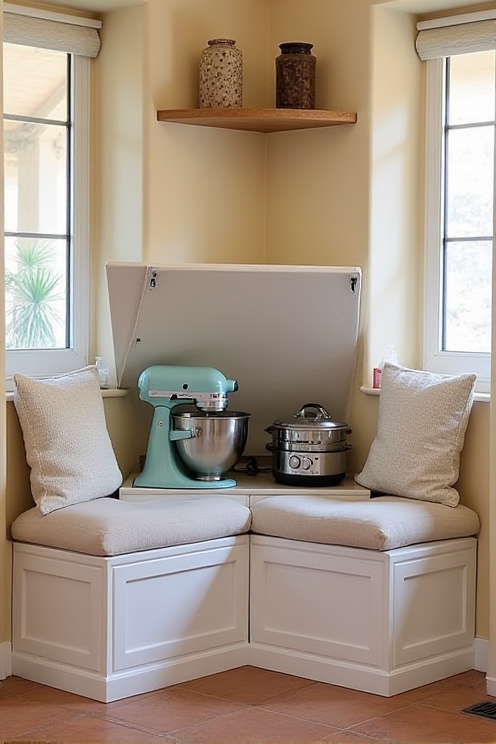
Eat-in kitchens often include bench seating around table. A banquette bench appliance chest hides seldom-used yet bulky gadgets beneath those cushions. Seat lifts on soft hinges to reveal padded compartments designed for stand mixer, slow cooker, food dehydrator, specialty grill. Base stays ventilated, dividers keep bodies upright, handles make lifting easier.
Appliances used once a week or once a month no longer claim precious cabinet real estate. Bench still offers comfortable seating. Under-seat volume turns into deep chest for gear with odd shapes. Perfect in small homes where dining area merges with cooking zone. Moving rarely used appliance from cabinet to bench frees drawers for daily plates and tools.
14) Under-sink sidewall appliance lane
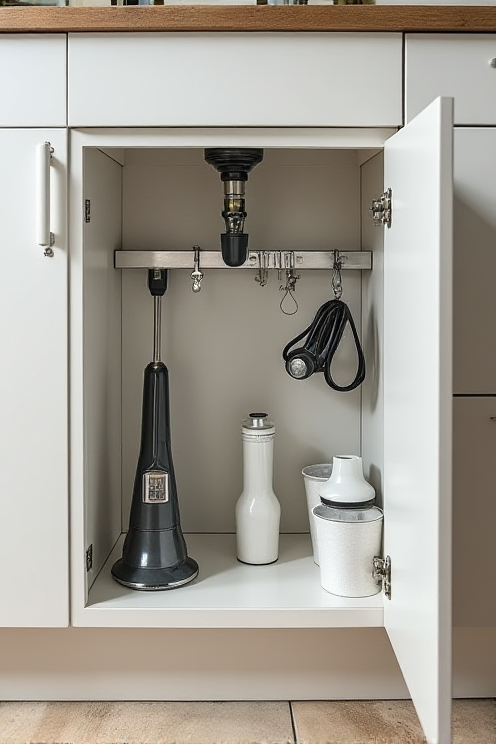
Area under sink often ends up chaotic. Under-sink sidewall appliance lane captures one side as structured tower for narrow appliances rather than random bottles. Vertical frame bolts to the cabinet wall with short shelves or rings sized for a handheld mixer, immersion blender, vacuum handheld, compact steamer. Plumbing remains clear in center. Door opens, tools line up neatly behind one side, cords wrapped onto small hooks.
This move works especially well in small apartments where an under-sink cabinet may be only a deep base without drawers. Instead of pushing appliances randomly around pipes, everything gains a clear vertical lane. Cleaning supplies still fit on floor or opposite wall.
15) Peg-grid pantry appliance wall
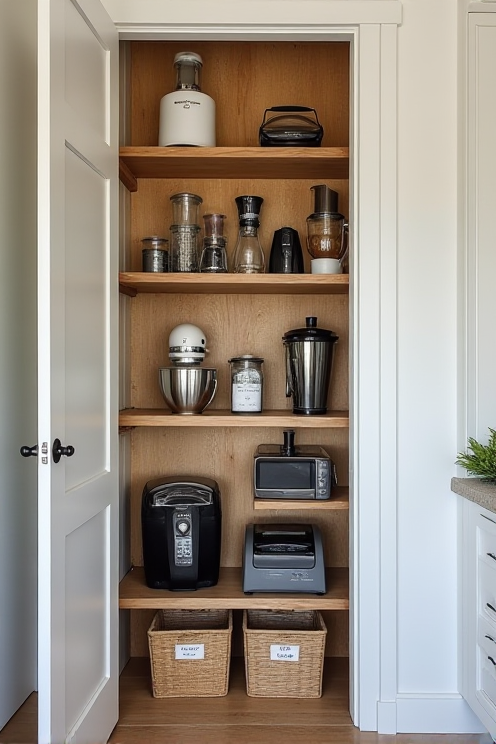
Typical pantry shelves stack appliances deep, hiding some behind others. Peg-grid pantry appliance wall flips storage to vertical. Back wall of pantry panelled with sturdy peg or rail grid. Metal brackets, shallow shelves, and cradles hook into holes, holding mixer, food processor, air fryer, juicer at different heights. Clear floor below for crates or bins. Each appliance has visible outline and dedicated hook-in spot.
Layout feels like workshop wall, but for kitchen gear. Pieces stay off floor, away from dust, still easy to lift out. When door opens, every machine becomes visible, so nothing gets forgotten for months. Grid can change as appliances rotate in and out of home.
16) Window-ledge plug-in appliance bar
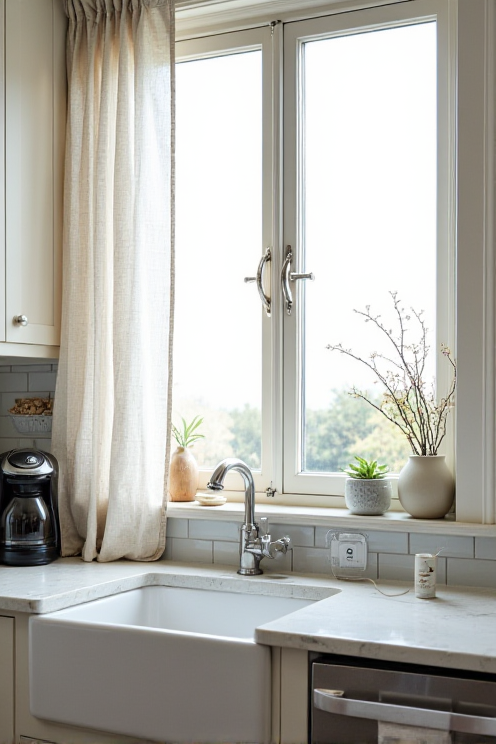
Many kitchens have windows placed just above counters. Window-ledge plug-in appliance bar turns lower window zone into narrow shelf dedicated to lightweight appliances, freeing central prep area. The custom ledge sits slightly forward of the window frame, with an integrated slim outlet strip tucked under the back lip. Frother base, compact grinder, single-serve coffee machine, small kettle line up here, cords hidden in rear channel.
Main counter in front stays mostly open for chopping and plating, while narrow bar carries tech. Morning routine lives along daylight line, making use feel pleasant but controlled. Shelf depth remains small, so pieces must stay curated rather than crowded.
17) Inside-door hanging rack for handheld appliances
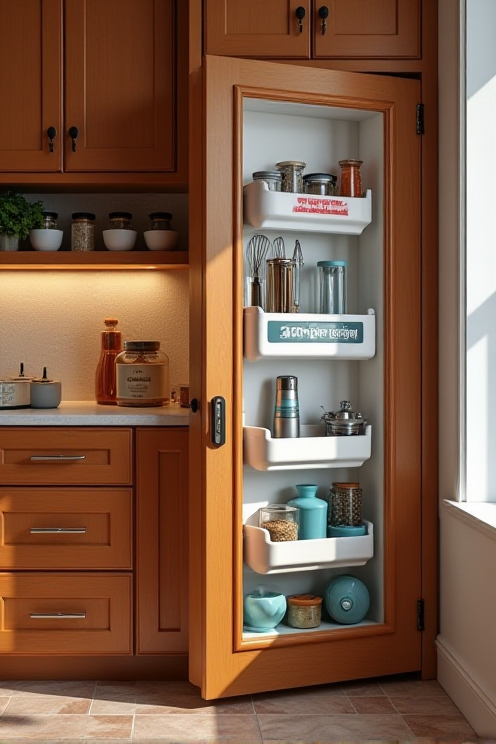
Cabinet doors often work only as thin barriers. Inside-door hanging rack puts their interior to work. Sturdy rails or molded pockets attach to inside of tall pantry or base cabinet door, sized for immersion blender, hand mixer, frother, plus attachments.
Each device sits in tailored cradle with raised edges and strap. Door swings open, tools line up within easy reach, cabinet interior stays free for bulkier appliances or pantry items behind.
Counters benefit because most small handhelds move off surfaces and out of drawers. Opening door reveals full micro-station instead of random clutter. Works especially well beside the main prep zone, shortening the reach between the cutting board and the power tools.
18) Slim pull-out “appliance spine” beside fridge
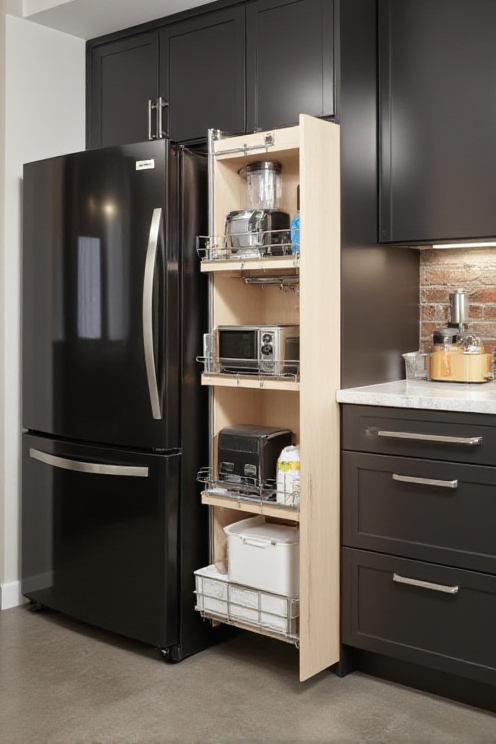
Narrow gap beside fridge often becomes broom corner or dead space. Slim pull-out appliance spine turns that sliver into vertical drawer for small to mid-size appliances. Drawer as tall as fridge slides out on heavy-duty rails. Interior is divided into short shelves or adjustable platforms sized for a blender, food processor, juicer, and mini rice cooker. Side rails stop pieces tipping. Cords coil onto hooks at back.
When closed, only a thin front panel shows, matching fridge panel or cabinet fronts. When pulled, the full column glides out, offering easy side access at multiple heights. No more stacking gadgets in dark cabinet corners. Pull-out pantry columns already prove how much storage fits in thin strips, and this concept simply trades cans for machines.
Wrap Up
A well-organized kitchen isn’t about having fewer appliances, it’s about storing them thoughtfully. When each appliance has a dedicated place, your counters stay clear and your kitchen feels more open and functional.
Small changes can make a big impact. With the right storage setup, even a busy kitchen can stay tidy, efficient, and ready for everyday cooking.

About Me
Hello !