
You swing open the pantry door and pause for a second. Something always seems to be leaning, sliding, or hiding behind another box.
It’s frustrating to discover expired soup pushed to the back. It’s even worse when you bring home groceries and realize you already had the same item buried on a crowded shelf.
That constant shuffle wastes time and money. When your pantry feels packed and messy, even a quick snack run can turn into a search mission.
27 Pantry Organization Ideas That Finally Fix Your Most Cluttered Cabinet
Pantry organization ideas work best when they create structure without making the space feel stiff. Start by clearing out expired food and separating items into clear groups, such as breakfast, snacks, baking, and dinner staples. When similar products stay together, shelves stop feeling overcrowded, and everything becomes easier to spot.
Storage tools can also change how the space functions. Clear containers, tiered risers, and labeled bins help prevent lost snacks and duplicate grocery purchases. With better visibility and defined zones, your pantry begins to support your routine instead of slowing it down.
1) Fluted glass pocket pantry
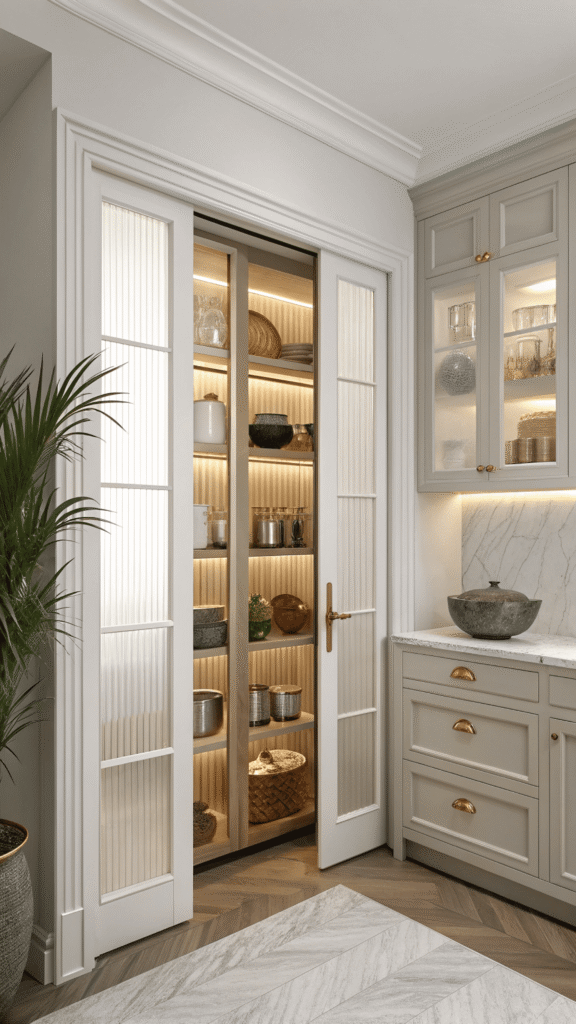
A pocket-door pantry can feel like built-in furniture rather than storage. Fluted glass panels soften visibility, so contents stay readable without looking busy. Start with warm-white interior paint, then add slim brass edge trim for a quiet polish. Use matching containers with rounded corners, plus two sizes of pull-out bins for fast access. Keep most-used categories at chest height. Heavy items are low. Backstock up high.
Light changes everything. Install motion-sensor LED strips along the undersides of shelves so corners never disappear. Add one shallow “landing tray” near the door for quick set-down and easy resets. Fluted glass diffuses clutter, while uniform shapes keep rhythm clean.
2) Parisian bistro brass rail pantry
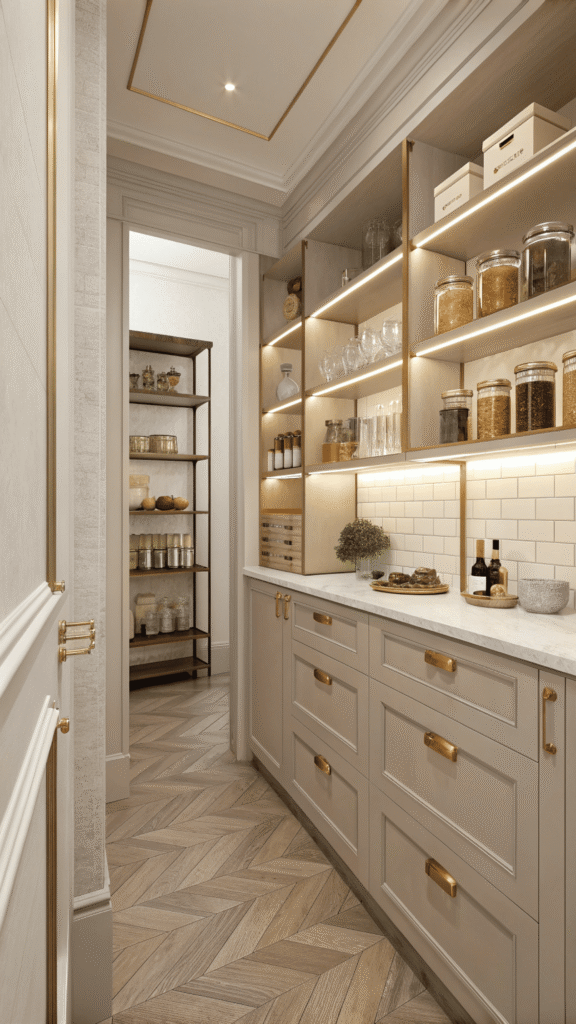
Bistro pantry style blends warmth, structure, and a touch of old-world shine. Think creamy shelves, tiny brass rails, and stone-toned trays that keep groups tight. Add a narrow “rail shelf” at eye level for most-used items, so hands land in the same place every time. Use square glass jars and matte ceramic canisters in matching heights. Keep labels off the visual plane. Let shapes do work.
Brass rail keeps containers from creeping forward and adds a refined finish without feeling formal. Add a small drawer insert for small loose items to keep the shelf surfaces quiet.
Lighting should be warm and slightly golden. Harsh white light makes brass look cold.
3) Desert modern sand-plaster pantry
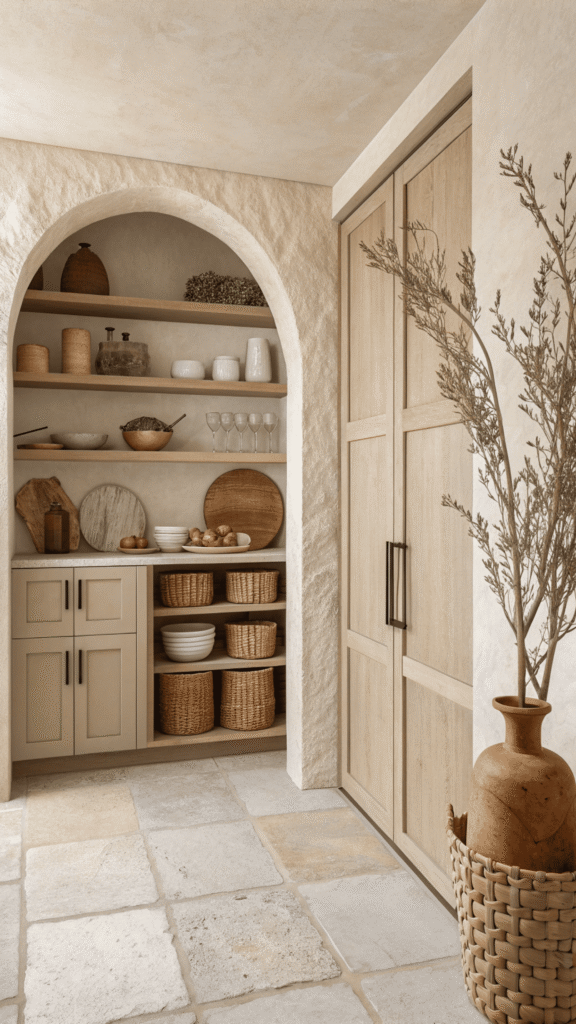
The Desert modern pantry feels warm, airy, and grounded. Use sand-toned shelves or a clay-beige backing panel to create soft depth. Add matte containers in off-white and warm taupe, plus one sculptural tray in travertine look for a refined center point. Keep edges simple. No gloss. No sharp contrast.
The organization relies on calm repetition. Two container sizes. Two bin depths. One basket texture, like woven paper fiber or palm. Place tall containers along the sides and low containers in the center to keep the shelf line gentle. Add warm LEDs with a dim setting. Soft shadows make space feel larger, not harsh.
4) Art Deco stepped-geometry pantry
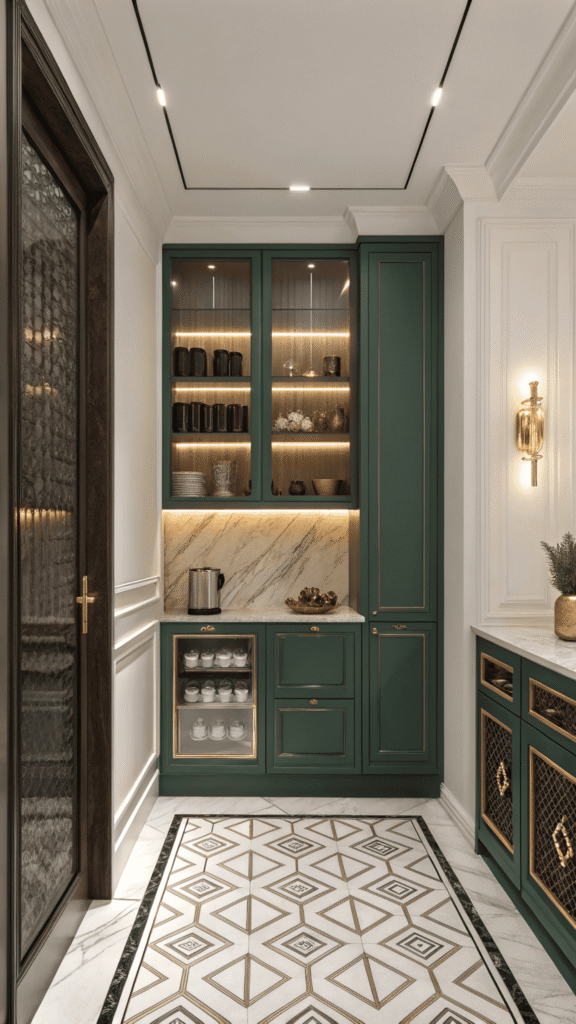
Art Deco pantry brings structure and elegance through geometry. Use a deep, jewel-tone back panel in emerald, ink, or charcoal green, paired with warm metallic accents. Add stepped shelf risers so containers display in tiers, like a boutique cabinet. Keep container shapes crisp: cylinders and rectangles only. Choose two finishes: clear glass and matte black, or smoked acrylic and cream ceramic.
Metal detail matters. Add slim brass corners on trays or a narrow brass rail to frame shelves. Lighting should be focused and slightly dramatic, with under-shelf LEDs that highlight edges and create depth.
5) Soft-curve minimal pantry with rounded shelves
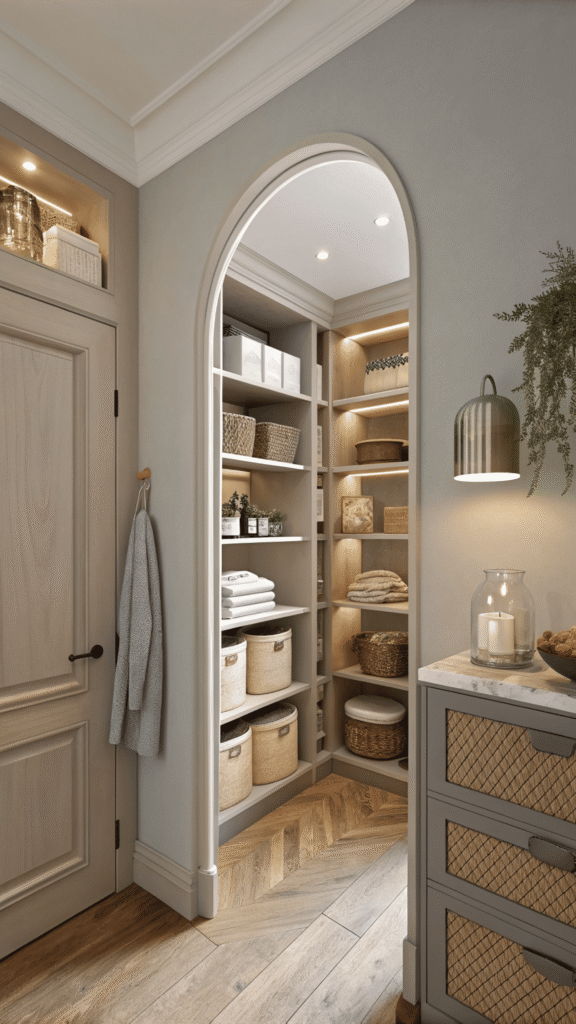
Rounded shelves instantly change the pantry’s mood. Curves soften hard corners, reduce visual clutter, and make tight spaces feel kinder. Use warm-white paint or a pale mushroom tone, then add rounded-edge shelf boards or curved corner guards.
Choose oval trays and softly shaped bins to echo the curve theme. Keep organization gentle and logical.
One large bin per category, plus a few small lidded boxes for overflow. Add a shallow drawer basket at waist height so small items never scatter. Lighting should be diffused, not spotlighted frosted LED strips or puck lights behind a small diffuser.
6) Pastel “milk-tea” tonal pantry
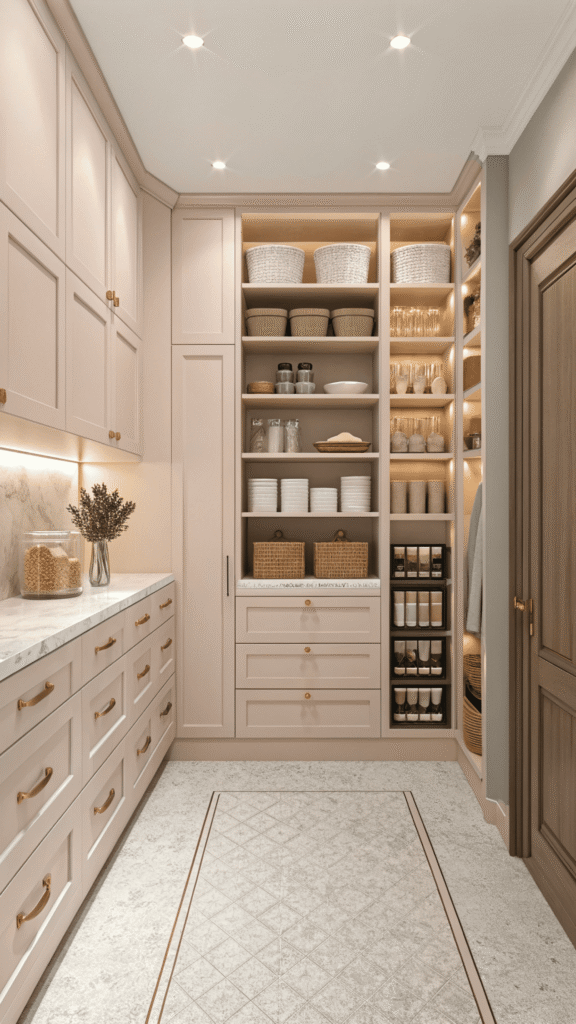
Tonal pastels bring calm without feeling bland. Milk-tea palette warm beige, blush-taupe, soft latte, muted cream creates a gentle order that still looks fresh. Use pale shelves with a slightly deeper back panel for depth. Choose matching bins in two pastel tones, then anchor with one clear bin style for visibility.
Tonal styling works best with repetition. Same bin shape, same lid color, same tray size. Add one satin-finish metal rail in champagne tone to keep edges tidy. Lighting should be warm-neutral so pastels stay true.
7) Copper utility pantry with tool zone
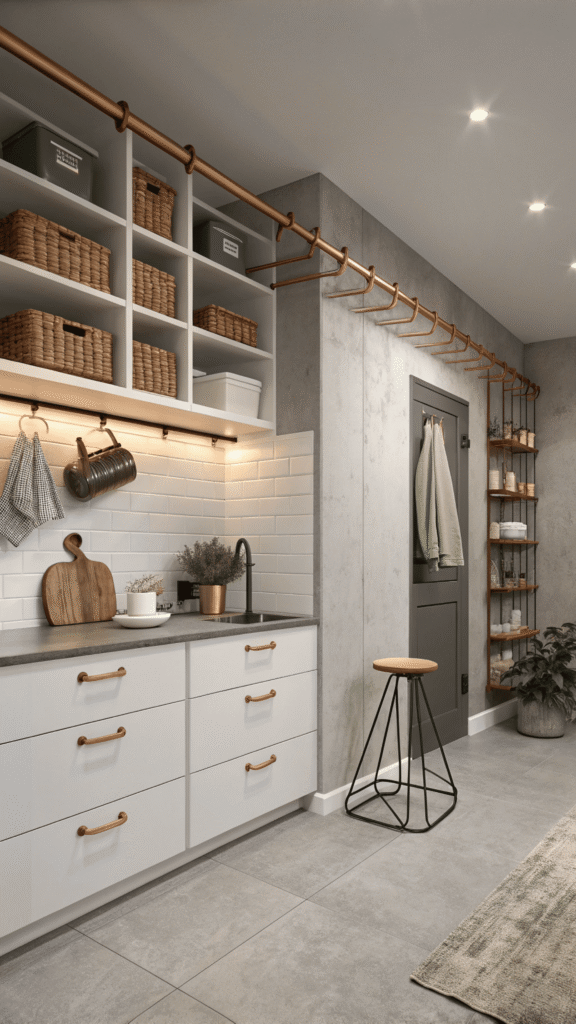
Copper accents bring warmth and “workroom” energy to pantry organization. Use matte white or soft gray shelves, then add copper hooks, a thin copper rail, and a copper-edged tray for a cohesive shine. Create a dedicated tool zone inside the door or the side wall: hooks for a scoop, a clip set, and lightweight containers. Keep tools visible, shelves calmer.
Storage stays simple. Two sizes of handled bins for categories, plus stackable boxes for backstock. Add one pull-out crate at waist height for fastest access. Warm LEDs reduce shadows and make copper glow without glare.
8) Black-stained pine “modern cabin” pantry
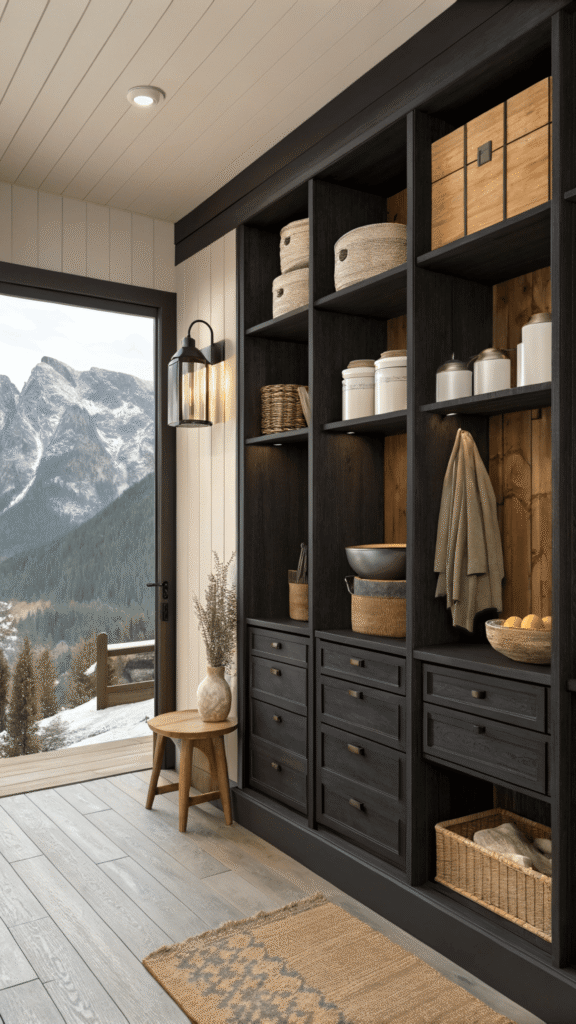
Modern cabin pantry combines dark-stained wood and crisp organization, creating a grounded, cozy look without rustic clutter. Use black-stained pine shelves or a stained back panel, then add warm cream containers to keep the contrast soft. Include chunky wood dividers that feel built-in.
Storage should feel sturdy. Use rigid bins with handles, plus one large wood crate for bulky items. Add warm LEDs so dark wood never feels heavy. Keep most-used items centered at eye level. Use the top shelf for lidded boxes to keep sightlines clean.
9) Neo-classic inset pantry with framed panels
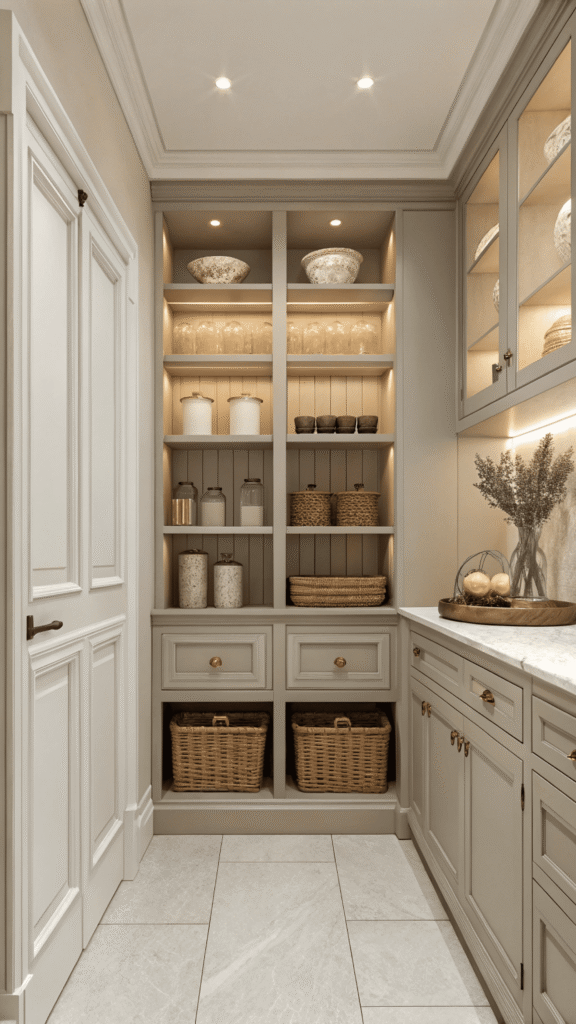
Neo-classic pantry feels tailored and calm, like a small custom room. Use framed wall panels or simple trim molding inside the pantry for structure. Paint in soft bone, pale taupe, or gentle gray-green. Add inset-style shelf edges, then choose matching containers with minimal visual breaks.
Organization becomes effortless when the layout follows classic proportions. Keep equal spacing between shelves. Use identical bin widths per row to ensure everything aligns. Add one marble-look tray for an elevated center shelf and a slim pull-out basket for daily grab items. Warm, even lighting keeps trim shadows soft and flattering.
10) Japanese shore minimalist pantry with cedar slats
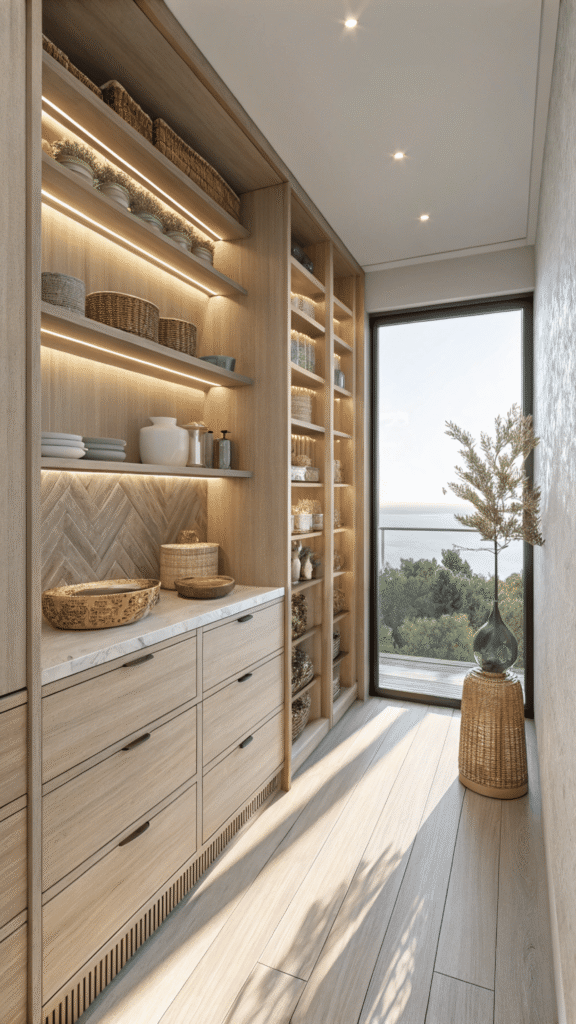
Cedar slats add quiet texture and a spa-like feel inside the pantry. Use a slatted back panel in light cedar or ash tone, then keep storage calm and low-contrast. Choose translucent containers, pale baskets, and a few matte stone trays. Keep shapes simple. Keep palette soft.
Slats do more than look good. They create vertical rhythm, making shelves feel less crowded. Add warm lighting along slats so the texture glows gently. Use one narrow pull-out tower for small items, hidden at the side, so the main shelves stay open.
11) English larder peg-rail pantry
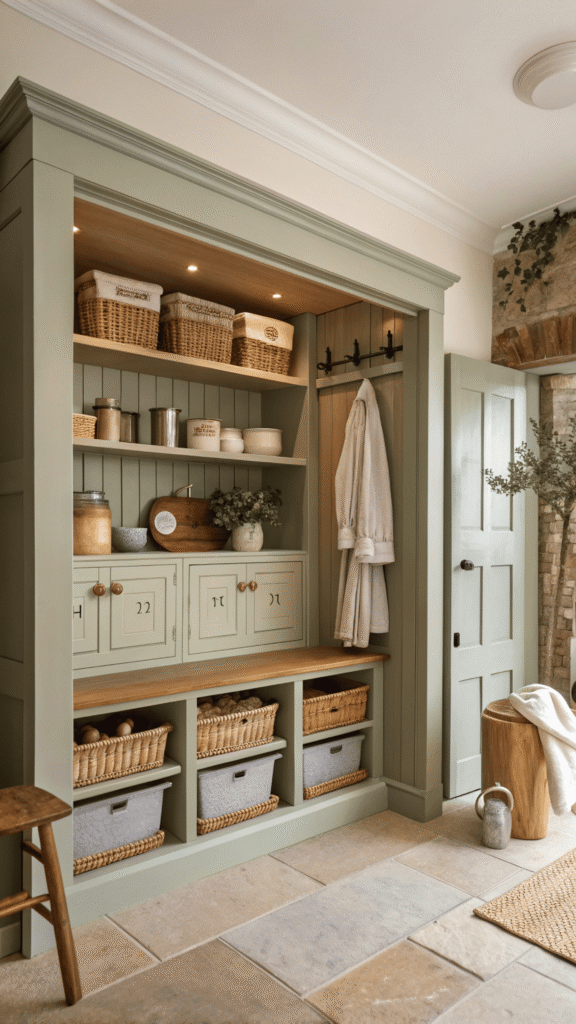
An English larder-style kitchen feels orderly, classic, and quietly charming. Use painted wood shelves in soft sage, putty, or cream. Add a peg rail just under the top shelf for hanging lightweight baskets and cloth bags. Peg rail creates vertical storage without crowding shelf surfaces.
Choose sturdy tin-style canisters, small wood crates, and shallow enamel-look trays for category zones. Keeping finishes mostly in place matters so the pantry stays calm. Add warm lighting near the rail to prevent shadow pockets. One small pull-out drawer basket at waist height keeps small items contained and easy to reach.
12) Pearl champagne “quiet glam” pantry
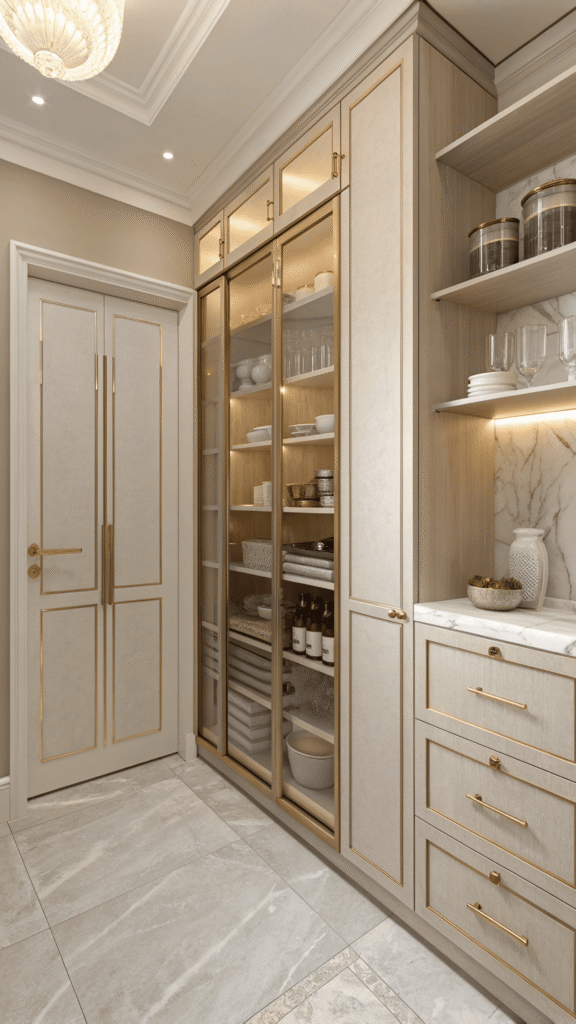
Quiet glam skips shine overload and leans into pearl tones, champagne metal, and soft reflection. Use warm pearl paint or satin-finish shelf liner. Add champagne-toned rails, hooks, or bin handles for a subtle glow. Choose frosted containers and creamy lidded boxes to keep shelves calm.
An organization becomes sleek when finishes remain consistent. One container height per shelf band. One tray finish throughout. Add a pull-out drawer bin for deep-shelf access and a single shallow “staging tray” at eye level for everyday items. Lighting should be warm-neutral, so pearl reads smooth, not yellow.
13) White tile backsplash, pantry “clean-lab” look
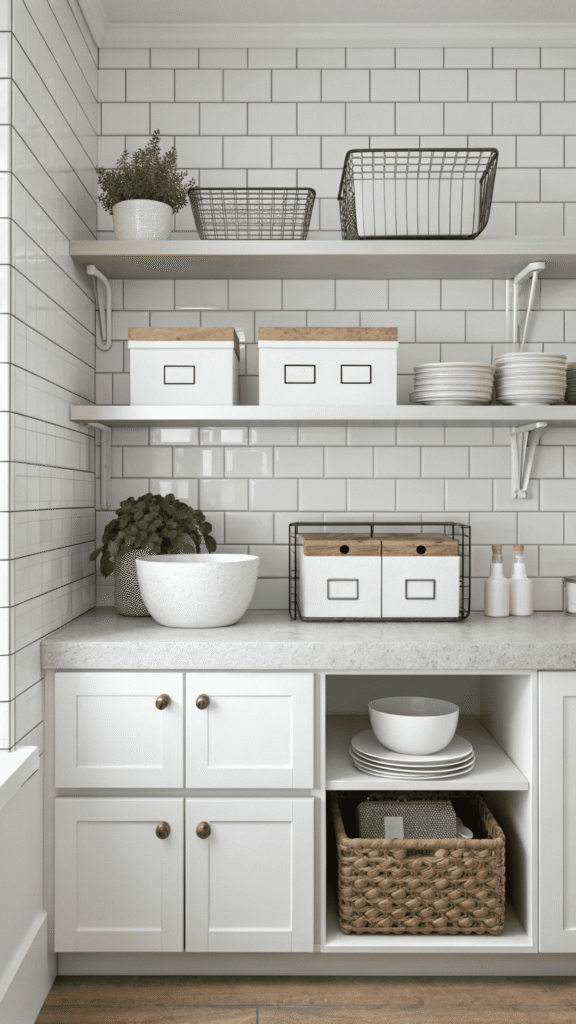
Tile inside the pantry feels unexpected, crisp, and extremely practical. Use small white tiles or tile-look panels as a backsplash behind shelves. Grout lines add a subtle grid structure, making the organization feel instantly cleaner. Pair with stainless or brushed nickel accents for a modern “clean lab” vibe—organized, bright, easy to maintain.
Choose clear-front bins and a few matte white boxes to balance reflections. Add slim metal shelf lips to keep containers aligned. Lighting should be bright and even, placed under shelves for shadow-free access.
14) Greenhouse pantry with plant-led styling
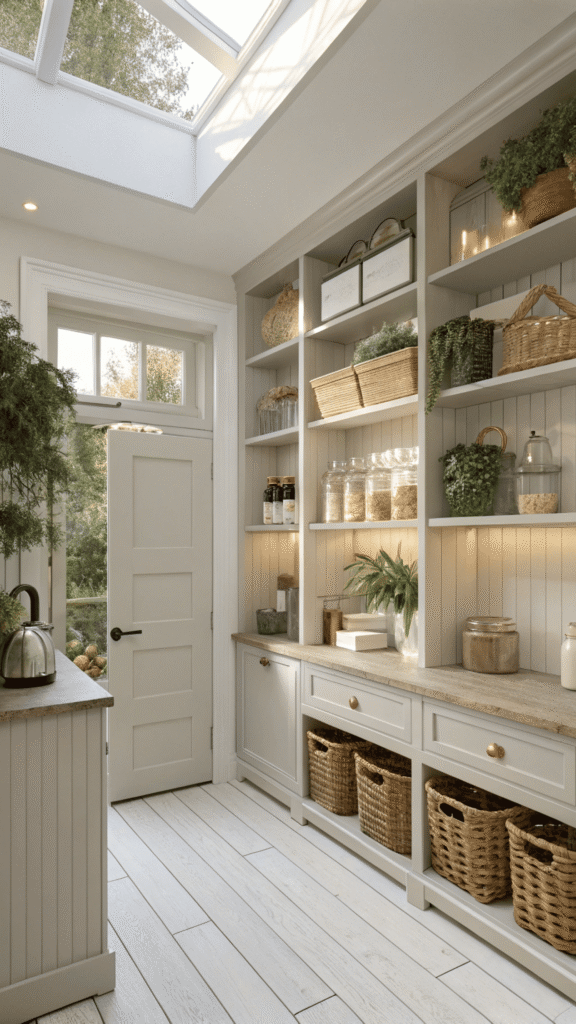
Greenhouse pantry style brings freshness through glass, greenery, and light. Use pale shelves, then add a few ribbed glass containers and clear bins to keep everything airy. Place one narrow plant shelf at the top, holding small potted greens that tolerate indirect light. Keep plant count minimal—two or three—so storage stays a priority.
Use warm-neutral lighting that supports plants and improves visibility. Add a slim wire basket system on the door for lightweight items, keeping shelf surfaces cleaner. Containers should stay consistent: clear, frosted, or pale ceramic.
15) Laundry-pantry combo cabinet wall
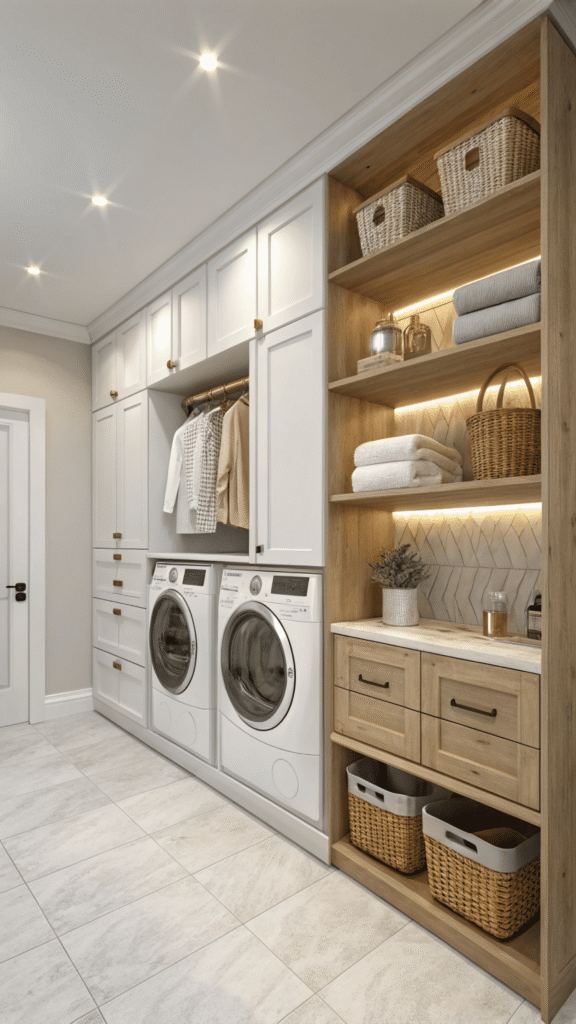
Laundry-pantry combo works when zones feel separate yet cohesive. Use a continuous cabinet wall with two visual languages: closed doors for supplies, open shelves for pantry storage. Keep finishes consistent, warm white cabinets, light wood shelves, and brushed nickel hardware, so the wall reads calm.
Inside the pantry zone, use lidded boxes and uniform bins to hide visual noise. Add mid-height slide-out trays for easy access in tight corridors. Use one tall cabinet for long items, one low drawer bank for small items. Lighting should be bright and even, especially in a multi-use corridor.
16) Corner carousel “turn-table” pantry
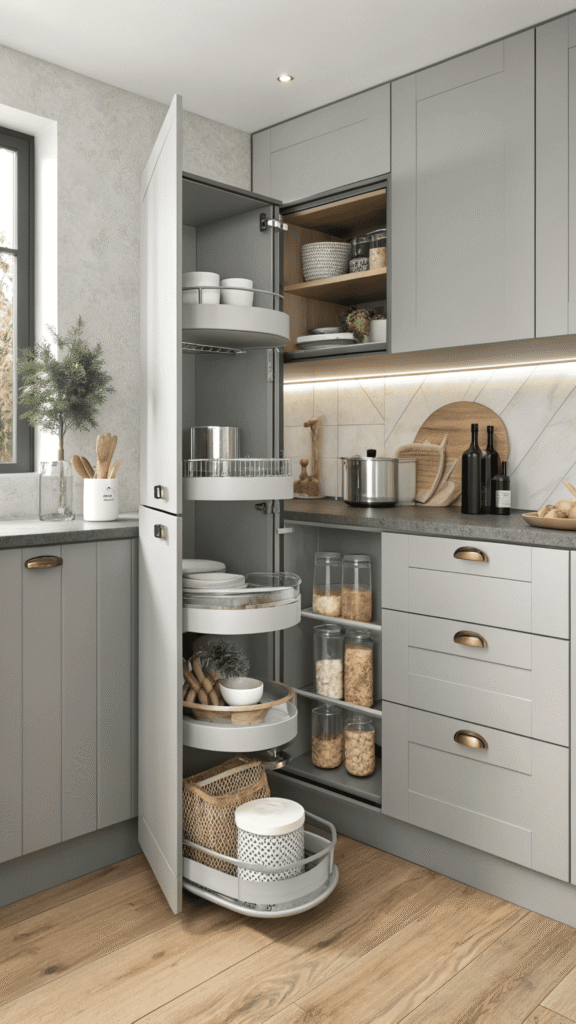
A corner pantry can be frustrating. Carousel styling fixes reach without overstuffing shelves. Use a corner turntable system on two shelves, then keep the remaining shelves for bins and boxes. Choose a neutral base, warm white, or soft gray, then add low-profile containers that fit the turning radius.
Keep carousel items in shallow trays with raised edges, so nothing tips during rotation. Use one tray per category and keep heights consistent. Add a slim vertical divider at the corner edge to prevent drift. Lighting should be strong near the corner, either a small spotlight or an LED bar.
17) Sliding ladder pantry in a narrow wall
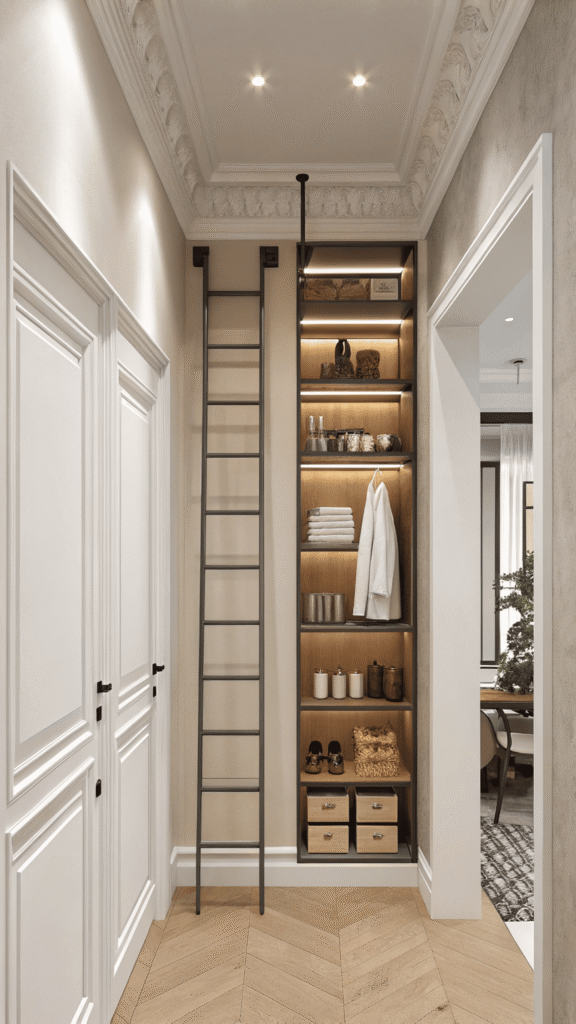
Tall, narrow pantry walls often waste vertical space. Sliding ladder styling turns height into a feature, making top shelves usable without the need for awkward stools. Use slim rails and a compact ladder that stores flush. Keep shelving shallow and consistent, then choose matching containers that stack neatly.
Create a vertical hierarchy. Daily items at mid height. Weekly items above. Long-term reserve at the top. Add a pull-out platform tray at waist height for quick staging, so hands stay organized during restock. Lighting should run vertically along the side panels to keep tall shelves readable.
18) Sensor-lit “no-touch” pantry
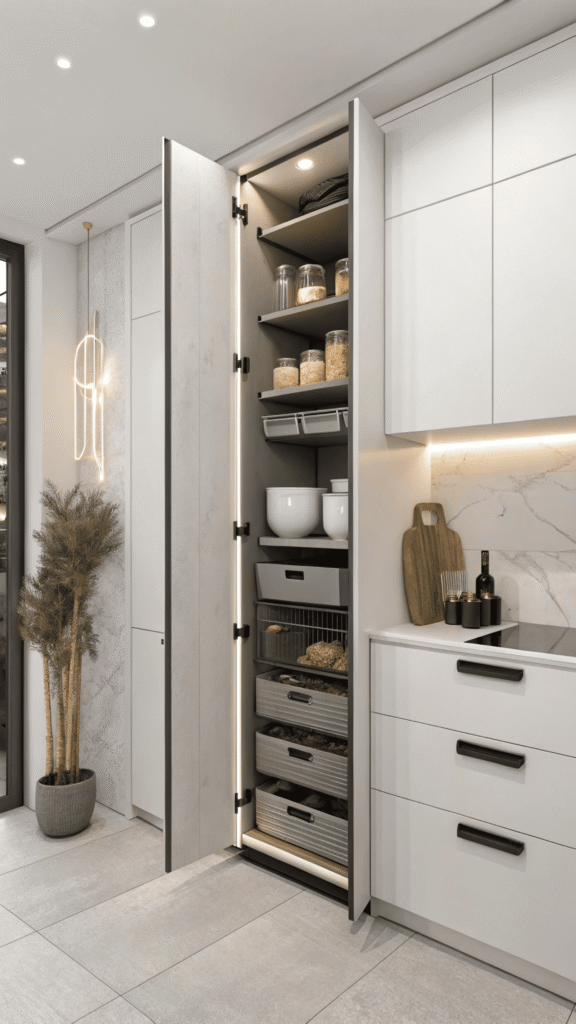
No-touch pantry feels modern and effortless. Motion sensors automatically turn on the light, while pull-out bins slide forward without rummaging. Use matte finishes that hide smudges, soft white, warm gray, and charcoal accents. Choose containers with easy-grip handles and smooth edges.
Set up a simple flow. Entry shelf near the door for daily items. Mid shelves for core categories. Low shelf for heavy storage. Use slide-out trays on deep shelves so everything comes forward together. Add a narrow charging shelf for a sensor hub and a small device, hidden behind a lidded box for visual calm.
19) Pantry as an open room divider
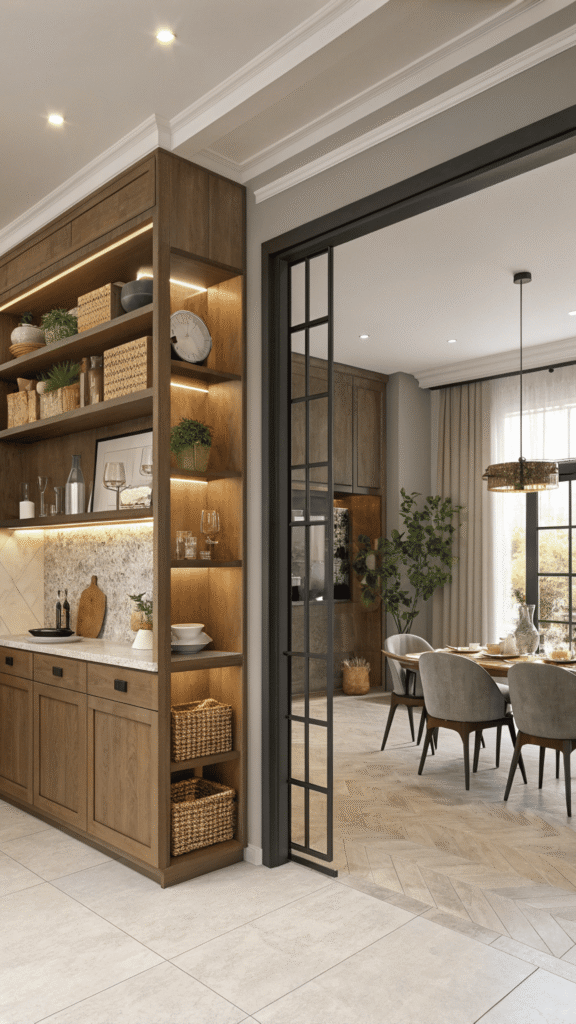
Room-divider pantry turns storage into architecture. Use open shelving as a partition between the kitchen and dining area, with clean backs and uniform containers so both sides look finished. Choose a warm neutral wood or painted finish, then keep storage consistent: matching bins, lidded boxes, and a few sculptural trays.
Design relies on double-sided styling. Place larger items low for stability. Keep eye-level shelves clean and balanced. Use mirrored container heights, so the divider reads intentionally from both rooms. Add integrated lighting inside shelves to create an evening glow and depth.
20) Glass-block lightwell pantry
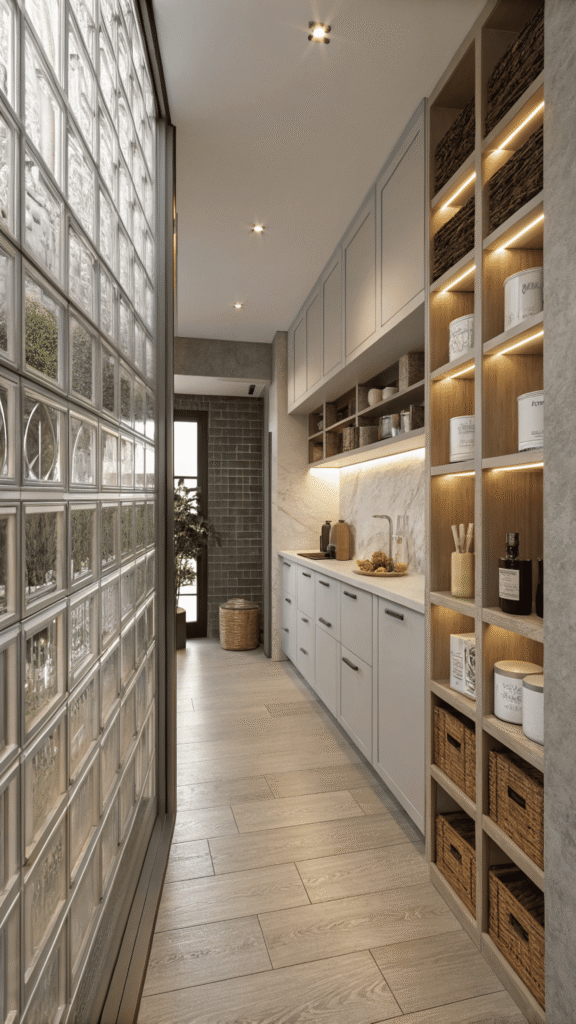
Glass blocks bring a daylight feel into pantries that normally stay dim. Use a glass-block side panel or faux glass-block screen to scatter light and add texture. Pair with clean white shelves and minimal hardware, so blocks remain a feature. Choose clear bins and frosted containers for a cohesive translucency theme.
Organization stays simple. Use shallow trays to group items, plus a few lidded boxes to hide clutter. Keep one vertical pull-out caddy near the glass-block side so light hits it, making contents easy to read. Lighting should be warm-neutral and minimal, since glass blocks already create a glow.
21) Reeded oak “texture grid” pantry
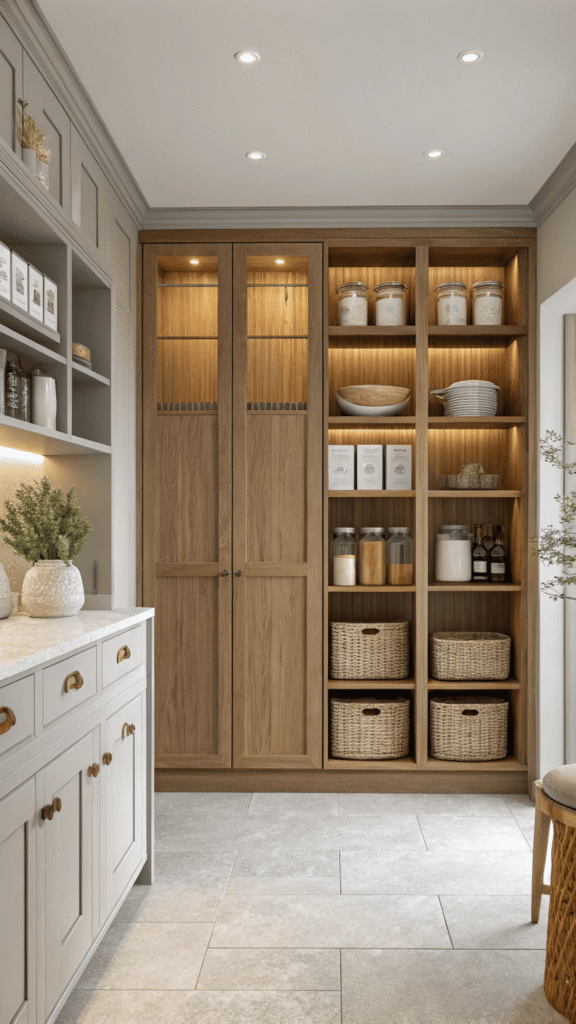
The reeded oak texture adds depth to the pantry without clutter. Use reeded wood panels on the back wall or cabinet doors, then keep storage quiet and uniform. Choose matte containers in warm off-white, with a few clear bins for visibility. Reeded texture breaks up large flat planes, making the pantry feel designed even when simple.
Build a grid layout: equal bin widths across each shelf, repeated tray sizes, consistent spacing between groups. Add warm under-shelf lighting to highlight reeding and keep shelf lines crisp. Keep one narrow vertical lane for tall items, so the rest of the grid stays steady.
22) Memphis-lite muted retro pantry
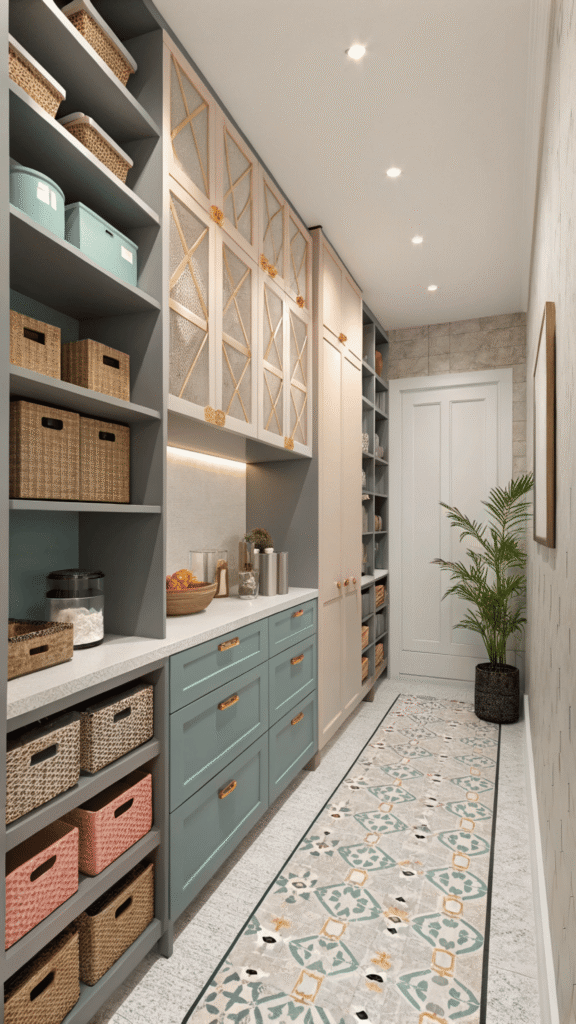
Muted retro pantry brings playful geometry without chaos. Use a soft neutral base, warm white shelves, then add a few geometric accents in dusty teal, muted coral, and charcoal. Keep shapes consistent: round bins, square trays, one zigzag edge detail used once. Limit pattern to one backing panel so space stays calm.
The organization stays strict, so the retro feels intentional. Use identical clear bins for most storage, then add colored handles or corner bumpers as an accent. Keep shelves aligned and front edges tidy. Lighting should be bright, and even so, colors look crisp, not muddy.
23) Alpine chalet pantry with wool + wood
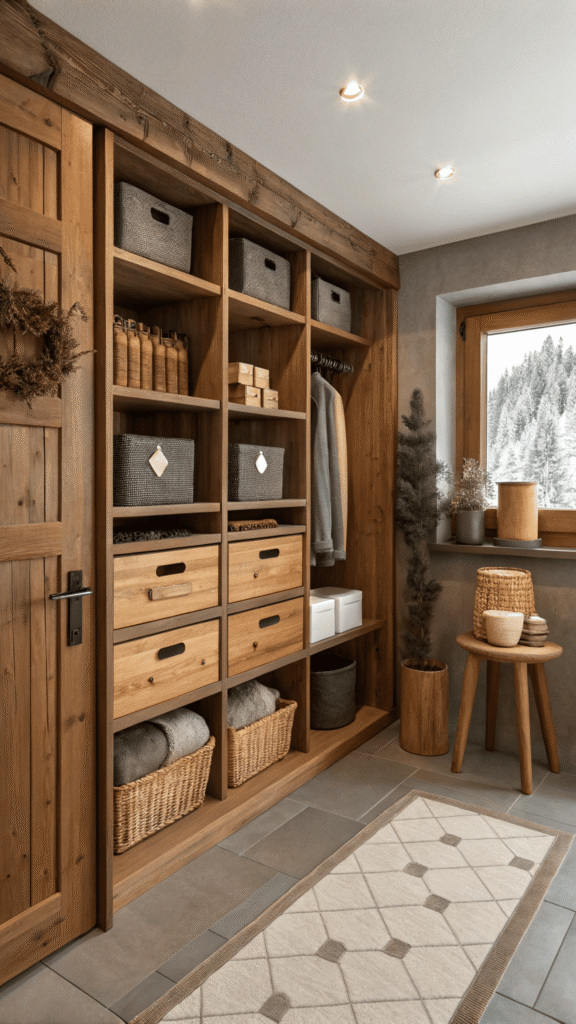
Alpine pantry feels warm, sturdy, and comforting. Use honey-toned shelves or a warm wood back panel. Add felted wool bins and wooden crates for soft texture and grip. Keep palette grounded, warm wood, cream, charcoal, hint of forest green. Lighting should be warm and low-glare, like cabin lighting, yet bright enough for function.
Organization stays practical. Large handled bins for categories. One deep crate at the bottom for heavy storage. Two lidded boxes up top for reserve. Add a narrow hook strip for cloth bags and small tools.
24) Moroccan-arch niche pantry with zellige tones
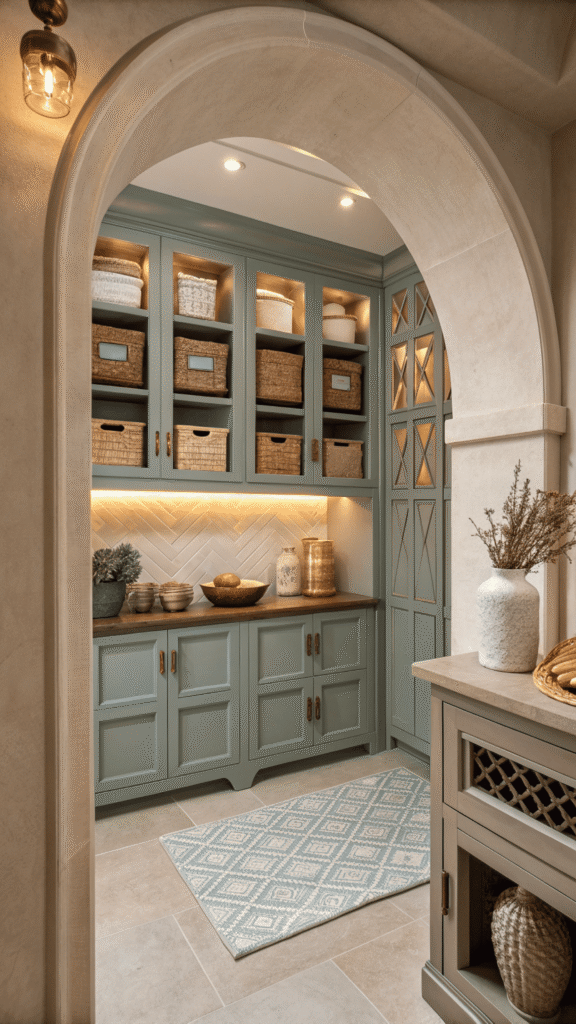
An arched niche detail can transform a pantry into a design feature. Use one shallow arched panel at the back painted in deep teal, clay, or warm white then keep storage calm and uniform. Add small mosaic-tone trays in muted zellige colors, used sparingly, to keep the palette refined.
The organization should stay structured. Uniform lidded boxes for backstock. Clear bins for daily categories. One carved-look tray at eye level acts as a visual anchor. Lighting should be warm and directional, highlighting the arch curve and creating soft shadows.
25) Wabi-sabi limewash pantry
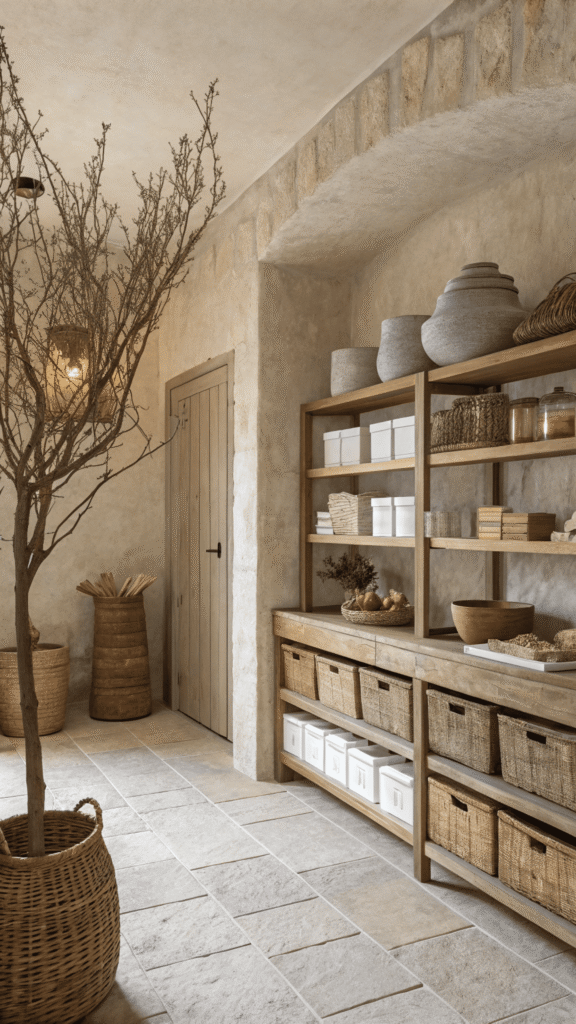
Wabi-sabi pantry embraces texture, imperfection, and calm utility. Use limewash-like paint in warm white, putty, or pale clay to create a gentle variation on walls and shelf backs. Pair with simple natural materials: raw wood trays, stone-like bins, and soft linen boxes. Avoid glossy plastic. Choose matte surfaces that feel quiet.
Organization stays intentional. Fewer categories, clearer zones. Use open trays for daily items and lidded boxes for reserve. Keep spacing generous. Let some wall texture show. Lighting should be warm and soft, placed to skim wall texture and reduce harsh shadows.
26) “Stack wall” pantry with crate modulars
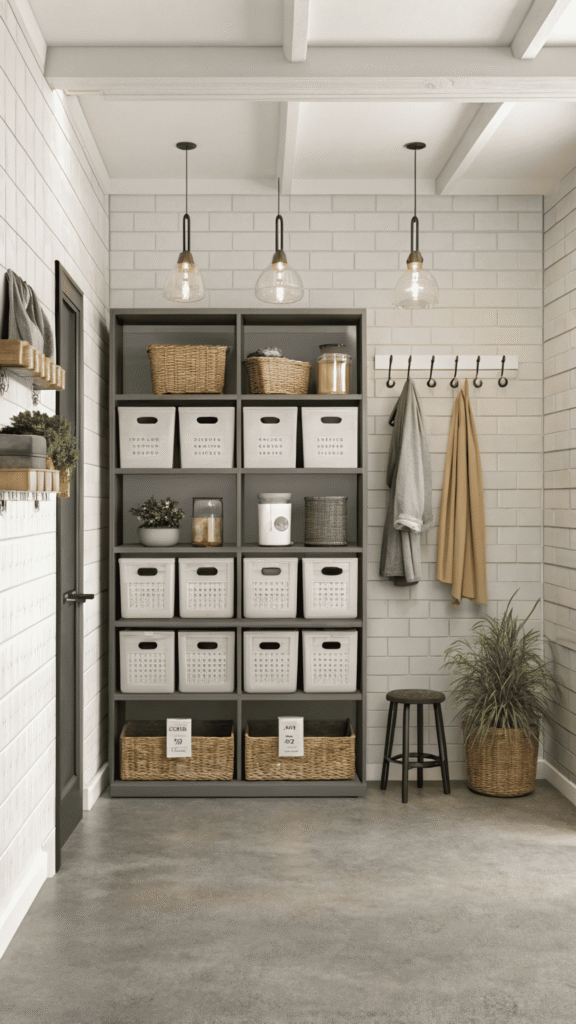
The modular crate pantry feels both flexible and bold. Use stackable crates or box modules that lock into a clean grid, like a storage wall. Finish in one tone—soft black, warm white, or natural wood so it reads like furniture, not clutter. Add a few slide-in bins inside crates to keep small items from drifting.
Layout stays adaptable. Crates can shift as needs change. Put heavy crates low for stability, lighter crates higher. Reserve one vertical column for tall items, one column for shallow trays, and one column for lidded boxes. Add LED strips along the outer frame for a clean outline glow.
The result feels modern, efficient, and easy to move. Great for renters, basements, garages, or secondary pantries. A strong look, built for real life.
27) Emergency-ready “grab box” pantry
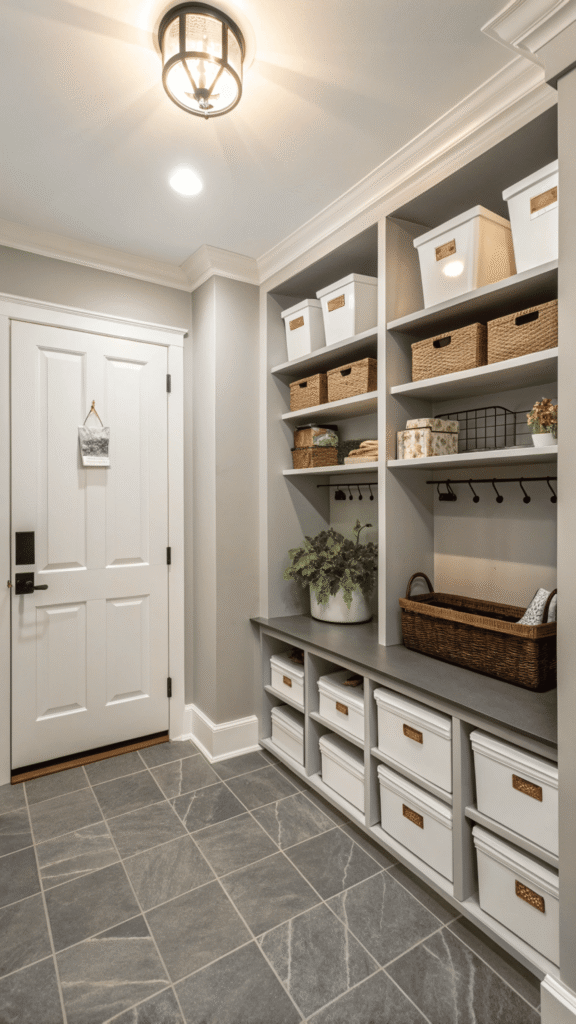
Emergency-ready pantry stays calm, not anxious. Design focuses on clarity, rotation, and fast access. Use sturdy lidded boxes in two sizes, all identical, with blank tag holders for optional organization. Keep one shelf dedicated to “grab boxes” near door—portable, easy to lift, always in same spot. Add a shallow tray beside them for small essentials that need quick visibility.
Use neutral colors so the space feels normal: warm white, light gray, soft black accents. Add bright, even lighting so nothing hides. Store heavy items low. Keep a simple rotation rhythm by placing the newest items behind and the older items in front.
Result feels secure and tidy, not cluttered. Pantry stays functional for everyday life while quietly supporting preparedness. Clean system. Easy maintenance. Clear mind.
Conclusion
A well-arranged pantry does more than look tidy. It saves money by reducing waste, prevents overbuying, and makes meal planning feel far less overwhelming. You gain a clearer view of what you actually use, which helps you shop with purpose instead of guessing in the store aisle.
Choose one section to reset this week and focus on steady progress rather than perfection. Small improvements create lasting habits, and those habits turn your pantry into a dependable, organized part of your kitchen that makes daily life feel more manageable.

About Me
Oliver Brown
Growing up in America, I was always curious about what made each state unique, from its people and culture to the stories and places that shape everyday life. That curiosity inspired me to create Decidel, a place where readers can discover America through news, travel, local experiences, and practical insights.